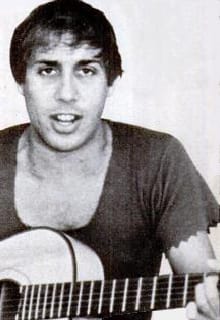
Photo: Unknown author / Public domain (source: Wikimedia Commons)
Born on January 6, 1938 in Milan, province of Milan, Italy, Adriano Celentano is a singer-songwriter, actor and comedian. That puts Adriano Celentano at 88 years old in 2026. Recorded honors include David di Donatello for Best Actor (1976), Nastro d'Argento for Best Score, Sanremo Music Festival and 1 more.
My Take
Adriano Celentano strikes me as a one-man embodiment of postwar Italian vitality. Born in Milan in 1938, he danced and sang his way out of hard times, earning the nickname Il Molleggiato for that irrepressible spring in his step. Roughly 150 million records is staggering, but what wins me over is his sheer refusal to specialize: singer, actor, comedian, director, screenwriter, all at a high level. The 1976 David di Donatello and his Sanremo legacy only confirm the range. There is something gloriously greedy and joyful about an artist who wants every stage at once, and I find that unbreakable, sunny defiance genuinely cool.
This take was written by generative AI, one per person, from publicly reported facts (editorial policy). It is a reading of the record, not reporting.
1. Profile
- Name (English)
- Adriano Celentano
- Name (Japanese)
- アドリアーノ・チェレンターノ
- Reading
- あどりあーの・ちぇれんたーの
- Born
- January 6, 1938 (age 88)
- Origin
- Milan, province of Milan, Italy
- Occupation
- singer-songwriter / actor / comedian / film director / screenwriter
- Zodiac / Chinese zodiac
- Capricorn / Tiger
2. Background
Awards & achievements
- 1976 David di Donatello for Best Actor
- Nastro d'Argento for Best Score
- Sanremo Music Festival
- 1969 Grolla d'oro for Best New Actor
3. Links
- Official sitehttps://ilmondodiadriano.it/
- Xhttps://x.com/clancelentano
- Wikipedia (English)https://en.wikipedia.org/wiki/Adriano%20Celentano
- Wikipedia (Japanese)https://ja.wikipedia.org/wiki/%E3%82%A2%E3%83%89%E3%83%AA%E3%82%A2%E3%83%BC%E3%83%8E%E3%83%BB%E3%83%81%E3%82%A7%E3%83%AC%E3%83%B3%E3%82%BF%E3%83%BC%E3%83%8E
- Wikidatahttps://www.wikidata.org/wiki/Q199943
4. About this entry
Tags
- Last updated
Facts are limited to publicly available information up to 2024; non-public or unconfirmed items are omitted. English text is machine-assisted (facts translated by Sonnet, "My Take" written by Opus 4.8). The Japanese page is the source of record.
Frequently asked questions
When was Adriano Celentano born?
Adriano Celentano was born on January 6, 1938 and is 88 years old.
Where is Adriano Celentano from?
Adriano Celentano is from Milan, province of Milan, Italy.
What does Adriano Celentano do?
Adriano Celentano works as singer-songwriter, actor, comedian, film director, screenwriter.
Singer-songwriter — see all → · Actor — see all → · More people from Italy → · More people born on January 6 →