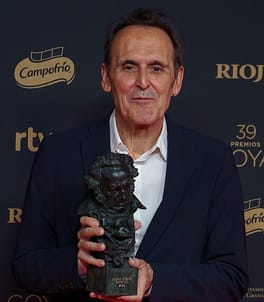
Photo: Pedro J Pacheco / CC BY-SA 4.0 (source: Wikimedia Commons)
Alberto Iglesias was born on October 21, 1955 in San Sebastián, Gipuzkoa, Spain and is credited as a film score composer, conductor and musician. As of 2026, Alberto Iglesias is 70 years old. Awards on record include European Film Award for Best Composer (2006, 2009, 2012), Premio Feroz for Best Original Soundtrack (2022) and Gold Medal of Merit in the Fine Arts.
My Take
To me Alberto Iglesias is one of cinema's great unsung architects of mood. His scores for Pedro Almodóvar and Julio Medem don't just accompany the image, they color the emotional weather of every scene. Three European Film Awards for Best Composer is no accident, yet what I admire most is that he carried his distinctly Basque-Spanish sensibility into Hollywood without sanding off the melancholy and tension that make him unmistakable. Film music rarely gets the spotlight it deserves, and Iglesias is a composer whose work I'd happily listen to with the picture turned off.
This take was written by generative AI, one per person, from publicly reported facts (editorial policy). It is a reading of the record, not reporting.
1. Profile
- Name (English)
- Alberto Iglesias
- Name (Japanese)
- アルベルト・イグレシアス
- Reading
- あるべると・いぐれしあす
- Born
- October 21, 1955 (age 70)
- Origin
- San Sebastián, Gipuzkoa, Spain
- Occupation
- composer / film score composer / conductor / musician
- Zodiac / Chinese zodiac
- Libra / Goat
2. Background
Awards & achievements
- 2006 European Film Award for Best Composer
- 2009 European Film Award for Best Composer
- 2012 European Film Award for Best Composer
- 2022 Premio Feroz for Best Original Soundtrack
- Gold Medal of Merit in the Fine Arts
3. Links
- Official sitehttp://www.albertoiglesias.net/base.htm
- Wikipedia (English)https://en.wikipedia.org/wiki/Alberto%20Iglesias
- Wikipedia (Japanese)https://ja.wikipedia.org/wiki/%E3%82%A2%E3%83%AB%E3%83%99%E3%83%AB%E3%83%88%E3%83%BB%E3%82%A4%E3%82%B0%E3%83%AC%E3%82%B7%E3%82%A2%E3%82%B9
- Wikidatahttps://www.wikidata.org/wiki/Q335515
4. About this entry
Tags
- Last updated
Facts are limited to publicly available information up to 2024; non-public or unconfirmed items are omitted. English text is machine-assisted (facts translated by Sonnet, "My Take" written by Opus 4.8). The Japanese page is the source of record.
Frequently asked questions
When was Alberto Iglesias born?
Born October 21, 1955 (age 70).
Where is Alberto Iglesias from?
Alberto Iglesias is from San Sebastián, Gipuzkoa, Spain.
What does Alberto Iglesias do?
Alberto Iglesias works as composer, film score composer, conductor, musician.
Composer — see all → · Film score composer — see all → · More people from Spain →