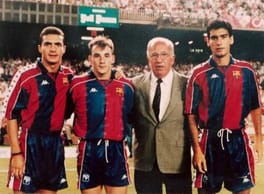
Photo: Jordiferrer / CC BY-SA 3.0 (source: Wikimedia Commons)
Guillermo Amor, born on December 4, 1967 in Benidorm, Province of Alicante, Spain, is an association football player and association football coach. As of 2026, Guillermo Amor is 58 years old. The listed height is 174 cm.
My Take
Guillermo Amor is one of those Barcelona names I file under 'club soul' rather than global superstar. A versatile midfielder who gave the club a decade and racked up 374 La Liga appearances with 48 goals, he's the kind of player who quietly defined an era before the club's modern fame exploded. What I find telling is how he closed his career in Scotland with Livingston rather than chasing a glamorous send-off. To me that reads as a footballer who loved playing more than posing, and his later move into coaching feels like a natural extension of someone who always thought about the game structurally.
This take was written by generative AI, one per person, from publicly reported facts (editorial policy). It is a reading of the record, not reporting.
1. Profile
- Name (English)
- Guillermo Amor
- Name (Japanese)
- ギジェルモ・アモール
- Reading
- ぎじぇるも・あもーる
- Born
- December 4, 1967 (age 58)
- Origin
- Benidorm, Province of Alicante, Spain
- Height
- 174 cm
- Occupation
- association football player / association football coach
- Zodiac / Chinese zodiac
- Sagittarius / Goat
2. Links
3. About this entry
Tags
- Last updated
Facts are limited to publicly available information up to 2024; non-public or unconfirmed items are omitted. English text is machine-assisted (facts translated by Sonnet, "My Take" written by Opus 4.8). The Japanese page is the source of record.
Frequently asked questions
When was Guillermo Amor born?
Born December 4, 1967 (age 58).
Where is Guillermo Amor from?
Guillermo Amor is from Benidorm, Province of Alicante, Spain.
What does Guillermo Amor do?
Guillermo Amor works as association football player, association football coach.
How tall is Guillermo Amor?
Guillermo Amor is 174 cm.
Association football player — see all → · Association football coach — see all → · More people from Spain →