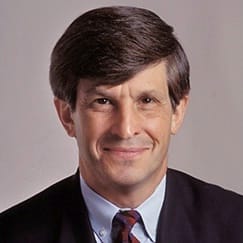
Photo: Unknown author / Public domain (source: Wikimedia Commons)
Allan Lichtman is listed as a political scientist, historian and university teacher. Born on April 4, 1947, Allan Lichtman is from New York City, New York, United States. The age as of 2026 is 79. Education on record includes Stuyvesant High School and Harvard University.
My Take
Allan Lichtman is exactly the kind of mind I find magnetic. Rather than chasing horse-race polls, he built the Keys to the White House, a structural model born from collaboration with a Soviet seismologist, treating elections like earthquakes you can read by their tremors. That intellectual audacity, predicting outcomes through governance fundamentals instead of noise, is what I respect most. People argue endlessly over his hits and misses, but the real value is the framework itself: a Harvard historian insisting that history has a discernible architecture. I don't need him to be infallible; I admire the stubborn conviction that the world is legible if you look hard enough.
This take was written by generative AI, one per person, from publicly reported facts (editorial policy). It is a reading of the record, not reporting.
1. Profile
- Name (English)
- Allan Lichtman
- Name (Japanese)
- アラン・リクトマン
- Reading
- あらん・りくとまん
- Born
- April 4, 1947 (age 79)
- Origin
- New York City, New York, United States
- Occupation
- political scientist / historian / university teacher / journalist
- Zodiac / Chinese zodiac
- Aries / Boar
2. Background
- High school
- Stuyvesant High School
- University
- Harvard University
3. Links
4. About this entry
Tags
- Last updated
Facts are limited to publicly available information up to 2024; non-public or unconfirmed items are omitted. English text is machine-assisted (facts translated by Sonnet, "My Take" written by Opus 4.8). The Japanese page is the source of record.
Frequently asked questions
When was Allan Lichtman born?
Allan Lichtman was born on April 4, 1947 and is 79 years old.
Where is Allan Lichtman from?
Allan Lichtman is from New York City, New York, United States.
What does Allan Lichtman do?
Allan Lichtman works as political scientist, historian, university teacher, journalist.
Where did Allan Lichtman study?
Allan Lichtman attended Harvard University.
Political scientist — see all → · Historian — see all → · More people from the United States → · More people born on April 4 →