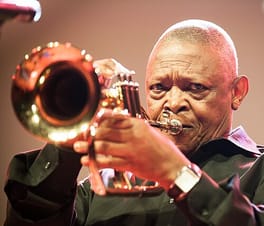
Photo: WOMEX / CC BY 2.0 (source: Wikimedia Commons)
Hugh Masekela was born on April 4, 1939 in Witbank, Mpumalanga, South Africa and was credited as a trumpeter, composer and jazz musician. Hugh Masekela died on January 23, 2018 at the age of 78. Recorded honors include Etnosur award (2011), Channel O Music Video Awards (2005), Ghana Music Awards (2007) and 1 more.
My Take
Masekela is one of those rare artists where the music and the man are inseparable. I'm drawn less to the technical brilliance of his horn and more to what he chose to point it at: he turned a flugelhorn into an instrument of conscience, scoring the anti-apartheid struggle with songs that outlived the regime they opposed. There's something deeply moving about a boy from a Witbank mining town becoming the father of South African jazz. Even years after his death, his sound feels less like nostalgia and more like a standing invitation to refuse injustice. I respect him enormously.
This take was written by generative AI, one per person, from publicly reported facts (editorial policy). It is a reading of the record, not reporting.
1. Profile
- Name (English)
- Hugh Masekela
- Name (Japanese)
- ヒュー・マセケラ
- Reading
- ひゅー・ませけら
- Born
- April 4, 1939 – January 23, 2018
- Origin
- Witbank, Mpumalanga, South Africa
- Occupation
- trumpeter / composer / jazz musician / recording artist
- Zodiac / Chinese zodiac
- Aries / Rabbit
2. Background
Awards & achievements
- 2011 Etnosur award
- 2005 Channel O Music Video Awards
- 2007 Ghana Music Awards
- 2010 Order of Ikhamanga in Gold
3. Links
- Official sitehttps://hughmasekela.co.za
- Xhttps://x.com/hughmasekela
- Wikipedia (English)https://en.wikipedia.org/wiki/Hugh%20Masekela
- Wikipedia (Japanese)https://ja.wikipedia.org/wiki/%E3%83%92%E3%83%A5%E3%83%BC%E3%83%BB%E3%83%9E%E3%82%BB%E3%82%B1%E3%83%A9
- Wikidatahttps://www.wikidata.org/wiki/Q246594
4. About this entry
Tags
- Last updated
Facts are limited to publicly available information up to 2024; non-public or unconfirmed items are omitted. English text is machine-assisted (facts translated by Sonnet, "My Take" written by Opus 4.8). The Japanese page is the source of record.
Frequently asked questions
When was Hugh Masekela born?
Born April 4, 1939.
When did Hugh Masekela die?
Died January 23, 2018, aged 78.
Where was Hugh Masekela from?
Hugh Masekela was from Witbank, Mpumalanga, South Africa.
What did Hugh Masekela do?
Hugh Masekela worked as trumpeter, composer, jazz musician, recording artist.
Trumpeter — see all → · Composer — see all → · More people from South Africa →