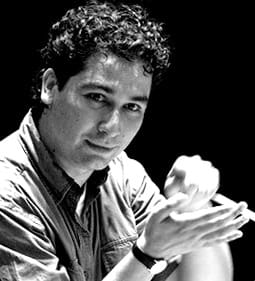
Photo: Bastisinger / CC BY-SA 4.0 (source: Wikimedia Commons)
Andrés Orozco-Estrada was born on December 14, 1977 in Medellín, Antioquia, Colombia. Andrés Orozco-Estrada is listed as a conductor, violinist and musician. That works out to 48 years old in 2026. Schooling on record includes University of Music and Performing Arts Vienna. Awards on record include Order of Honour (Lower Austria).
My Take
Andrés Orozco-Estrada is one of the most charismatic conductors to come out of Latin America. Born in Medellín, he trained in Vienna and rose to lead major orchestras including the Houston Symphony and Frankfurt Radio Symphony, holding dual Colombian-Austrian nationality. There's a warmth and physical energy to his podium style that pulls audiences in. I find his trajectory inspiring; a Colombian kid making it to the heart of the European classical establishment is a real breaking of the mold. The fact that he started as a violinist shows on the podium, in how naturally he draws lyricism out of an orchestra.
This take was written by generative AI, one per person, from publicly reported facts (editorial policy). It is a reading of the record, not reporting.
1. Profile
- Name (English)
- Andrés Orozco-Estrada
- Name (Japanese)
- アンドレス・オロスコ=エストラーダ
- Reading
- あんどれす・おろすこ=えすとらーだ
- Born
- December 14, 1977 (age 48)
- Origin
- Medellín, Antioquia, Colombia
- Occupation
- conductor / violinist / musician
- Zodiac / Chinese zodiac
- Sagittarius / Snake
2. Background
- University
- University of Music and Performing Arts Vienna
Awards & achievements
- Order of Honour (Lower Austria)
3. Links
- Official sitehttps://www.orozco-estrada.com/
- Wikipedia (English)https://en.wikipedia.org/wiki/Andr%C3%A9s%20Orozco-Estrada
- Wikipedia (Japanese)https://ja.wikipedia.org/wiki/%E3%82%A2%E3%83%B3%E3%83%89%E3%83%AC%E3%82%B9%E3%83%BB%E3%82%AA%E3%83%AD%E3%82%B9%E3%82%B3%EF%BC%9D%E3%82%A8%E3%82%B9%E3%83%88%E3%83%A9%E3%83%BC%E3%83%80
- Wikidatahttps://www.wikidata.org/wiki/Q946712
4. About this entry
Tags
- Last updated
Facts are limited to publicly available information up to 2024; non-public or unconfirmed items are omitted. English text is machine-assisted (facts translated by Sonnet, "My Take" written by Opus 4.8). The Japanese page is the source of record.
Frequently asked questions
When was Andrés Orozco-Estrada born?
Born December 14, 1977 (age 48).
Where is Andrés Orozco-Estrada from?
Andrés Orozco-Estrada is from Medellín, Antioquia, Colombia.
What does Andrés Orozco-Estrada do?
Andrés Orozco-Estrada works as conductor, violinist, musician.
Conductor — see all → · Violinist — see all → · More people from Colombia →