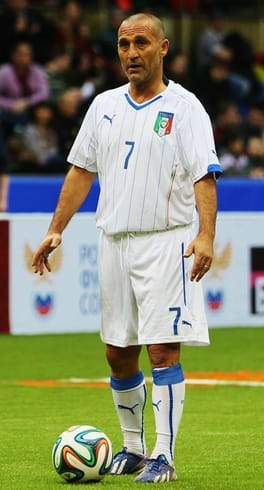
Photo: Дмитрий Садовников / CC BY-SA 3.0 (source: Wikimedia Commons)
Angelo Di Livio is an association football player and association football coach, born on July 26, 1966 in Rome, Province of Rome, Italy. Angelo Di Livio is 60 years old as of 2026. Recorded honors include Knight of the Order of Merit of the Italian Republic (2000). The listed height is 173 cm.
My Take
What I respect most about Angelo Di Livio is that he built a long Serie A career on grit rather than flash. A midfielder and wing-back who ran himself ragged for the team, he earned his stripes at Juventus, collecting domestic and European silverware in an era when Italian football was at its peak. He even picked up a knighthood from the Italian Republic in 2000, which tells you how he was regarded back home. Players like him rarely top highlight reels, but every winning side needs one. He later moved into coaching, which feels like a natural fit for someone so tactically dependable.
This take was written by generative AI, one per person, from publicly reported facts (editorial policy). It is a reading of the record, not reporting.
1. Profile
- Name (English)
- Angelo Di Livio
- Name (Japanese)
- アンジェロ・ディ・リービオ
- Reading
- あんじぇろ・でぃ・りーびお
- Born
- July 26, 1966 (age 60)
- Origin
- Rome, Province of Rome, Italy
- Height
- 173 cm
- Occupation
- association football player / association football coach
- Zodiac / Chinese zodiac
- Leo / Horse
2. Background
Awards & achievements
- 2000 Knight of the Order of Merit of the Italian Republic
3. Links
4. About this entry
Tags
- Last updated
Facts are limited to publicly available information up to 2024; non-public or unconfirmed items are omitted. English text is machine-assisted (facts translated by Sonnet, "My Take" written by Opus 4.8). The Japanese page is the source of record.
Frequently asked questions
When was Angelo Di Livio born?
Born July 26, 1966 (age 60).
Where is Angelo Di Livio from?
Angelo Di Livio is from Rome, Province of Rome, Italy.
What does Angelo Di Livio do?
Angelo Di Livio works as association football player, association football coach.
How tall is Angelo Di Livio?
Angelo Di Livio is 173 cm.
Association football player — see all → · Association football coach — see all → · More people from Italy →