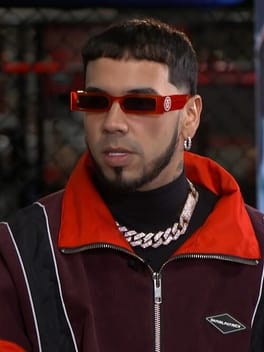
Photo: Tony Dandrades / CC BY 3.0 (source: Wikimedia Commons)
Anuel AA was born in Carolina, United States on November 26, 1992. Anuel AA is credited as a rapper, singer and songwriter. That works out to 33 years old in 2026.
My Take
Anuel AA crowning himself the God of Latin trap is the kind of bravado that makes me roll my eyes and lean in at the same time. Self-mythologizing is practically the job description in this genre, and the Puerto Rican rapper wears it well. What actually interests me is his instinct for sampling the songs that shaped his youth, folding nostalgia into something aggressively present. I cannot follow every lyric, but the sheer pressure of his sound translates across any language barrier. Born in 1992, he is a product of his neighborhood through and through, and that rootedness is what gives the swagger real weight.
This take was written by generative AI, one per person, from publicly reported facts (editorial policy). It is a reading of the record, not reporting.
1. Profile
- Name (English)
- Anuel AA
- Name (Japanese)
- アヌエル エーエー
- Reading
- あぬえる えーえー
- Born
- November 26, 1992 (age 33)
- Origin
- Carolina, United States
- Occupation
- rapper / singer / songwriter
- Zodiac / Chinese zodiac
- Sagittarius / Monkey
2. Links
- Official sitehttps://anuelaa.com
- Instagramhttps://www.instagram.com/anuel/
- Xhttps://x.com/Anuel_2bleA
- Wikipedia (English)https://en.wikipedia.org/wiki/Anuel%20AA
- Wikipedia (Japanese)https://ja.wikipedia.org/wiki/%E3%82%A2%E3%83%8C%E3%82%A8%E3%83%ABAA
- Wikidatahttps://www.wikidata.org/wiki/Q26690130
3. About this entry
Tags
- Last updated
Facts are limited to publicly available information up to 2024; non-public or unconfirmed items are omitted. English text is machine-assisted (facts translated by Sonnet, "My Take" written by Opus 4.8). The Japanese page is the source of record.
Frequently asked questions
When was Anuel AA born?
Born November 26, 1992 (age 33).
Where is Anuel AA from?
Anuel AA is from Carolina, United States.
What does Anuel AA do?
Anuel AA works as rapper, singer, songwriter.
Rapper — see all → · Singer — see all → · More people from the United States →