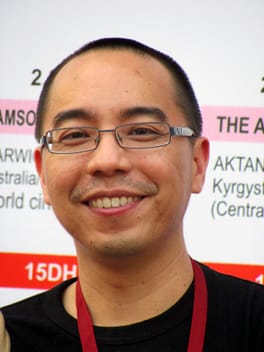
Photo: Thachan.makan / CC BY-SA 3.0 (source: Wikimedia Commons)
Apichatpong Weerasethakul was born on July 16, 1970 in Bangkok, Thailand. Apichatpong Weerasethakul is credited as a film director, film producer and screenwriter. That works out to 56 years old in 2026. Schooling on record includes Khon Kaen University. Awards on record include Yanghyun Prize (2014), Officer of Arts and Letters (2011), Fukuoka Asian Culture Prize (2013) and 1 more.
My Take
Apichatpong Weerasethakul is a filmmaker I admire for refusing every commercial shortcut. The Bangkok-born director won the Palme d'Or at Cannes for Uncle Boonmee Who Can Recall His Past Lives, and his work drifts dreamily between memory, myth and the waking world until your sense of time goes soft. He's also an installation artist, which makes him hard to categorize at all, working far outside the conventional studio system. Watching him, I get the feeling I've been led into a private universe rather than handed a plot. It's exactly this kind of uncompromising, boundary-blurring artist who pushes Asian cinema onto the world stage, and I respect him enormously for it.
This take was written by generative AI, one per person, from publicly reported facts (editorial policy). It is a reading of the record, not reporting.
1. Profile
- Name (English)
- Apichatpong Weerasethakul
- Name (Japanese)
- アピチャートポン・ウィーラセータクン
- Reading
- あぴちゃーとぽん・うぃーらせーたくん
- Born
- July 16, 1970 (age 56)
- Origin
- Bangkok, Thailand
- Occupation
- film director / film producer / screenwriter / installation artist / director
- Zodiac / Chinese zodiac
- Cancer / Dog
2. Background
- University
- Khon Kaen University
Awards & achievements
- 2014 Yanghyun Prize
- 2011 Officer of Arts and Letters
- 2013 Fukuoka Asian Culture Prize
- 2004 Jury Prize
3. Links
- Official sitehttp://www.kickthemachine.com
- Wikipedia (English)https://en.wikipedia.org/wiki/Apichatpong%20Weerasethakul
- Wikipedia (Japanese)https://ja.wikipedia.org/wiki/%E3%82%A2%E3%83%94%E3%83%81%E3%83%A3%E3%83%BC%E3%83%88%E3%83%9D%E3%83%B3%E3%83%BB%E3%82%A6%E3%82%A3%E3%83%BC%E3%83%A9%E3%82%BB%E3%83%BC%E3%82%BF%E3%82%AF%E3%83%B3
- Wikidatahttps://www.wikidata.org/wiki/Q445198
4. About this entry
Tags
- Last updated
Facts are limited to publicly available information up to 2024; non-public or unconfirmed items are omitted. English text is machine-assisted (facts translated by Sonnet, "My Take" written by Opus 4.8). The Japanese page is the source of record.
Frequently asked questions
When was Apichatpong Weerasethakul born?
Born July 16, 1970 (age 56).
Where is Apichatpong Weerasethakul from?
Apichatpong Weerasethakul is from Bangkok, Thailand.
What does Apichatpong Weerasethakul do?
Apichatpong Weerasethakul works as film director, film producer, screenwriter, installation artist, director.
Film director — see all → · Film producer — see all → · More people from Thailand →