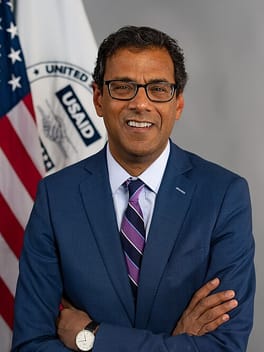
Photo: United States Agency for International Development / Public domain (source: Wikimedia Commons)
Born on November 5, 1965 in Brooklyn, New York, United States, Atul Gawande is a medical writer, journalist and professor. Atul Gawande is 60 years old as of 2026. Education on record includes Athens High School and Balliol College. Recorded honors include MacArthur Fellows Program (2006), Rhodes Scholarship (1987) and Henry Ingersoll Bowditch Award for Excellence in Public Health (2017). Credited works include The Checklist Manifesto.
My Take
Atul Gawande is, to me, a model of intelligence put in service of others. A Harvard surgeon who also writes might sound like a vanity project, but his real gift is translation: turning the terrifying complexity of medicine into prose ordinary readers can act on. The Checklist Manifesto took something as humble as a list and made it a matter of life and death, which I find quietly brilliant. With a Rhodes Scholarship and a MacArthur Fellowship behind him, he could have stayed cloistered in expertise. Instead he keeps opening the door. I deeply admire thinkers who refuse to hoard their knowledge.
This take was written by generative AI, one per person, from publicly reported facts (editorial policy). It is a reading of the record, not reporting.
1. Profile
- Name (English)
- Atul Gawande
- Name (Japanese)
- アトゥール・ガワンデ
- Reading
- あとぅーる・がわんで
- Born
- November 5, 1965 (age 60)
- Origin
- Brooklyn, New York, United States
- Occupation
- medical writer / journalist / professor / surgeon / researcher
- Zodiac / Chinese zodiac
- Scorpio / Snake
2. Background
- High school
- Athens High School
- University
- Balliol College
Awards & achievements
- 2006 MacArthur Fellows Program
- 1987 Rhodes Scholarship
- 2017 Henry Ingersoll Bowditch Award for Excellence in Public Health
3. Works & records
Filmography / notable works
| Category | Title |
|---|---|
| Notable work | The Checklist Manifesto |
4. Links
- Official sitehttps://atulgawande.com/
- Instagramhttps://www.instagram.com/atul.gawande/
- Xhttps://x.com/Atul_Gawande
- Wikipedia (English)https://en.wikipedia.org/wiki/Atul%20Gawande
- Wikipedia (Japanese)https://ja.wikipedia.org/wiki/%E3%82%A2%E3%83%88%E3%82%A5%E3%83%BC%E3%83%AB%E3%83%BB%E3%82%AC%E3%83%AF%E3%83%B3%E3%83%87
- Wikidatahttps://www.wikidata.org/wiki/Q2751383
5. About this entry
Tags
- Last updated
Facts are limited to publicly available information up to 2024; non-public or unconfirmed items are omitted. English text is machine-assisted (facts translated by Sonnet, "My Take" written by Opus 4.8). The Japanese page is the source of record.
Frequently asked questions
When was Atul Gawande born?
Born November 5, 1965 (age 60).
Where is Atul Gawande from?
Atul Gawande is from Brooklyn, New York, United States.
What does Atul Gawande do?
Atul Gawande works as medical writer, journalist, professor, surgeon, researcher.
What is Atul Gawande known for?
Notable works include The Checklist Manifesto.
Journalist — see all → · More people from the United States →