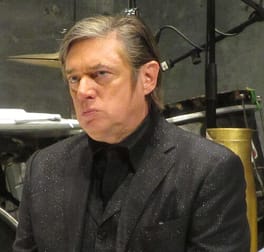
Photo: Benutzer:Smalltown Boy (Diskussion) / Public domain (source: Wikimedia Commons)
Born on January 12, 1959 in West Berlin, Germany, Blixa Bargeld is an actor, composer and experimental musician. As of 2026, Blixa Bargeld is 67 years old. Listed accolades include Qwartz Electronic Music Awards and Cross of the Order of Merit of the Federal Republic of Germany.
My Take
Blixa Bargeld fascinates me precisely because he refuses easy categorization. Born in West Berlin in 1959, he founded Einstürzende Neubauten in 1980 and turned industrial noise into something genuinely artful, then spent two decades alongside Nick Cave in the Bad Seeds. That dual life, leading his own experimental project while serving another visionary's vision, says a lot about his range and discipline. The German government recognizing him with the Cross of the Order of Merit feels almost ironic for an artist who built a career on dismantling convention. To me he is proof that the avant-garde can age into a respected institution without losing its edge.
This take was written by generative AI, one per person, from publicly reported facts (editorial policy). It is a reading of the record, not reporting.
1. Profile
- Name (English)
- Blixa Bargeld
- Name (Japanese)
- ブリクサ・バーゲルト
- Reading
- ぶりくさ・ばーげると
- Born
- January 12, 1959 (age 67)
- Origin
- West Berlin, Germany
- Occupation
- actor / composer / experimental musician / singer / writer
- Zodiac / Chinese zodiac
- Capricorn / Boar
2. Background
Awards & achievements
- Qwartz Electronic Music Awards
- Cross of the Order of Merit of the Federal Republic of Germany
3. Links
- Official sitehttp://www.blixa-bargeld.com
- Wikipedia (English)https://en.wikipedia.org/wiki/Blixa%20Bargeld
- Wikipedia (Japanese)https://ja.wikipedia.org/wiki/%E3%83%96%E3%83%AA%E3%82%AF%E3%82%B5%E3%83%BB%E3%83%90%E3%83%BC%E3%82%B2%E3%83%AB%E3%83%88
- Wikidatahttps://www.wikidata.org/wiki/Q316528
4. About this entry
Tags
- Last updated
Facts are limited to publicly available information up to 2024; non-public or unconfirmed items are omitted. English text is machine-assisted (facts translated by Sonnet, "My Take" written by Opus 4.8). The Japanese page is the source of record.
Frequently asked questions
When was Blixa Bargeld born?
Born January 12, 1959 (age 67).
Where is Blixa Bargeld from?
Blixa Bargeld is from West Berlin, Germany.
What does Blixa Bargeld do?
Blixa Bargeld works as actor, composer, experimental musician, singer, writer.
Actor — see all → · Composer — see all → · More people from Germany →