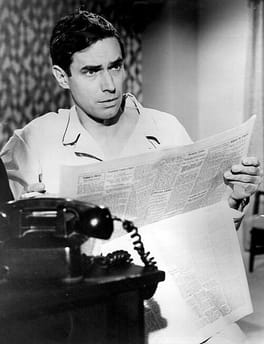
Photo: ABC Television / Public domain (source: Wikimedia Commons)
Bradford Dillman was a military officer, stage actor and film actor, born on April 14, 1930 in San Francisco, California, United States. Bradford Dillman died on January 16, 2018, aged 87. Education on record includes Yale University. Recorded honors include Theatre World Award (1957).
My Take
Bradford Dillman is one of those actors I genuinely wish more people remembered — a Yale man who brought real intellectual weight to Hollywood at a time when that wasn't always welcome. His work in Compulsion is quietly stunning; winning Best Actor at Cannes in 1959 alongside Dean Stockwell and Orson Welles ought to have made him a superstar, yet he never quite got the blockbuster vehicle he deserved. What I love most, though, is that he was there at the very beginning of Long Day's Journey into Night on Broadway, originating Edmund Tyrone — O'Neill's most autobiographical and agonizing role. The man had range, class, and a low-key intensity that aged beautifully across 140 productions. Gone in 2018, but worth rediscovering.
This take was written by generative AI, one per person, from publicly reported facts (editorial policy). It is a reading of the record, not reporting.
1. Profile
- Name (English)
- Bradford Dillman
- Name (Japanese)
- ブラッドフォード・ディルマン
- Reading
- ぶらっどふぉーど・でぃるまん
- Born
- April 14, 1930 – January 16, 2018
- Origin
- San Francisco, California, United States
- Occupation
- military officer / stage actor / film actor / television actor / writer
- Zodiac / Chinese zodiac
- Aries / Horse
2. Background
- University
- Yale University
Awards & achievements
- 1957 Theatre World Award
3. Links
4. About this entry
Tags
- Last updated
Only publicly available facts are listed; non-public or unconfirmed items are omitted. Base data was compiled from Wikidata from June 2026 onward; ages are recalculated daily and deaths are checked against Wikidata on an ongoing basis. English text is machine-assisted (facts translated by Sonnet, "My Take" written by Opus 4.8). The Japanese page is the source of record.
Frequently asked questions
When was Bradford Dillman born?
Bradford Dillman was born on April 14, 1930.
When did Bradford Dillman die?
Bradford Dillman died on January 16, 2018, aged 87.
Where was Bradford Dillman from?
Bradford Dillman was from San Francisco, California, United States.
What did Bradford Dillman do?
Bradford Dillman worked as military officer, stage actor, film actor, television actor, writer.
Where did Bradford Dillman study?
Bradford Dillman attended Yale University.
Military officer — see all → · Stage actor — see all → · More people from the United States → · More people born on April 14 →