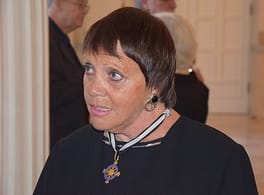
Photo: StagiaireMGIMO / CC BY-SA 3.0 (source: Wikimedia Commons)
Brigitte Fassbaender was born on July 3, 1939 in Berlin, Germany and is credited as an opera singer, music educator and director. As of 2026, Brigitte Fassbaender is 87 years old. Awards on record include Bavarian Order of Merit, Knight Commander's Cross of the Order of Merit of the Federal Republic of Germany, Pour le Mérite for Sciences and Arts order and 5 more.
My Take
Brigitte Fassbaender is, to my ear, operatic nobility in the truest sense. Born in Berlin in 1939, this German mezzo-soprano earned the rare Kammersaengerin title from both the Bavarian and Vienna State Operas, then reinvented herself entirely as intendant of the Tyrolean State Theatre for over a decade. What fascinates me is that pivot: few great singers can run an institution, fewer still do both with distinction. Her shelf of honors, from the Legion of Honour to multiple German orders, only confirms a life of artistry backed by real leadership. I find her career quietly heroic and worthy of deep respect.
This take was written by generative AI, one per person, from publicly reported facts (editorial policy). It is a reading of the record, not reporting.
1. Profile
- Name (English)
- Brigitte Fassbaender
- Name (Japanese)
- ブリギッテ・ファスベンダー
- Reading
- ぶりぎって・ふぁすべんだー
- Born
- July 3, 1939 (age 87)
- Origin
- Berlin, Germany
- Occupation
- opera singer / music educator / director / singer / speaker
- Zodiac / Chinese zodiac
- Cancer / Rabbit
2. Background
Awards & achievements
- Bavarian Order of Merit
- Knight Commander's Cross of the Order of Merit of the Federal Republic of Germany
- Pour le Mérite for Sciences and Arts order
- 1995 Bavarian Maximilian Order for Science and Art
- 2011 Legion of Honour
- 1987 honorary doctor of the University of Manchester
- 2001 Officer's Cross of the Order of Merit of the Federal Republic of Germany
- 1985 Frankfurter Musikpreis
3. Links
4. About this entry
Tags
- Last updated
Facts are limited to publicly available information up to 2024; non-public or unconfirmed items are omitted. English text is machine-assisted (facts translated by Sonnet, "My Take" written by Opus 4.8). The Japanese page is the source of record.
Frequently asked questions
When was Brigitte Fassbaender born?
Born July 3, 1939 (age 87).
Where is Brigitte Fassbaender from?
Brigitte Fassbaender is from Berlin, Germany.
What does Brigitte Fassbaender do?
Brigitte Fassbaender works as opera singer, music educator, director, singer, speaker.
Opera singer — see all → · Music educator — see all → · More people from Germany →