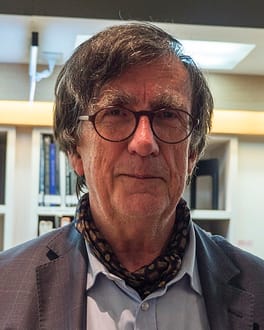
Photo: KOKUYO / CC BY-SA 4.0 (source: Wikimedia Commons)
Public records list Bruno Latour as an anthropologist, sociologist and professor. Bruno Latour was born on June 22, 1947 in Beaune, Côte-d’Or, France. Death is recorded on October 9, 2022, at the age of 75. Education on record includes Tours University. Recorded honors include Knight of the Legion of Honour (2011), Holberg International Memorial Prize (2013), Albertus-Magnus professorate (2015) and 5 more.
My Take
Bruno Latour is one of those thinkers I find genuinely difficult and genuinely worth the struggle. His insistence on treating objects and humans as actors in the same network reshaped science and technology studies and unsettled a lot of comfortable assumptions. The Beaune-born philosopher, anthropologist and sociologist collected the Holberg Prize and the Legion of Honour, but his real legacy is conceptual mischief that still provokes. Since his death in 2022 his ideas feel more urgent, not less, especially around climate and how we narrate the modern world. I count him among the indispensable awkward voices.
This take was written by generative AI, one per person, from publicly reported facts (editorial policy). It is a reading of the record, not reporting.
1. Profile
- Name (English)
- Bruno Latour
- Name (Japanese)
- ブルーノ・ラトゥール
- Reading
- ぶるーの・らとぅーる
- Born
- June 22, 1947 – October 9, 2022
- Origin
- Beaune, Côte-d’Or, France
- Occupation
- anthropologist / sociologist / professor / philosopher / writer
- Zodiac / Chinese zodiac
- Cancer / Boar
2. Background
- University
- Tours University
Awards & achievements
- 2011 Knight of the Legion of Honour
- 2013 Holberg International Memorial Prize
- 2015 Albertus-Magnus professorate
- 2008 Siegfried Unseld Preis
- 1992 John Desmond Bernal Prize
- 2017 Officer of the National Order of Merit
- 1992 prix Roberval Grand public
- 1996 honorary doctorate of Lund University
3. Links
- Official sitehttps://www.bruno-latour.fr
- Xhttps://x.com/BrunoLatourAIME
- Wikipedia (English)https://en.wikipedia.org/wiki/Bruno%20Latour
- Wikipedia (Japanese)https://ja.wikipedia.org/wiki/%E3%83%96%E3%83%AB%E3%83%BC%E3%83%8E%E3%83%BB%E3%83%A9%E3%83%88%E3%82%A5%E3%83%BC%E3%83%AB
- Wikidatahttps://www.wikidata.org/wiki/Q355237
4. About this entry
Tags
- Last updated
Facts are limited to publicly available information up to 2024; non-public or unconfirmed items are omitted. English text is machine-assisted (facts translated by Sonnet, "My Take" written by Opus 4.8). The Japanese page is the source of record.
Frequently asked questions
When was Bruno Latour born?
Bruno Latour was born on June 22, 1947.
When did Bruno Latour die?
Bruno Latour died on October 9, 2022, aged 75.
Where was Bruno Latour from?
Bruno Latour was from Beaune, Côte-d’Or, France.
What did Bruno Latour do?
Bruno Latour worked as anthropologist, sociologist, professor, philosopher, writer.
Where did Bruno Latour study?
Bruno Latour attended Tours University.
Anthropologist — see all → · Sociologist — see all → · More people from France → · More people born on June 22 →