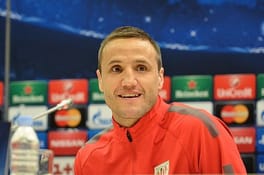
Photo: Богдан Заяц / CC BY-SA 3.0 (source: Wikimedia Commons)
Carlos Gurpegui was born in Pamplona, Navarre, Spain on August 19, 1980. Carlos Gurpegui is an association football player and association football coach. That works out to 46 years old in 2026. The listed height is 181 cm.
My Take
Carlos Gurpegui is the kind of loyal one-club man I cannot help but admire. He spent his entire professional career at Athletic Bilbao, a club bound to Basque identity, racking up nearly 400 appearances across fourteen La Liga seasons. His path was scarred by a two-year ban over a nandrolone test, yet he came back, kept playing, and later moved into coaching. That resilience matters more to me than any trophy. A versatile defensive midfielder who could also slot into the back line, he was never the star, but he was indispensable. Devoting a whole life to one city and one badge is a story I genuinely cherish.
This take was written by generative AI, one per person, from publicly reported facts (editorial policy). It is a reading of the record, not reporting.
1. Profile
- Name (English)
- Carlos Gurpegui
- Name (Japanese)
- カルロス・グルペギ
- Reading
- かるろす・ぐるぺぎ
- Born
- August 19, 1980 (age 46)
- Origin
- Pamplona, Navarre, Spain
- Height
- 181 cm
- Occupation
- association football player / association football coach
- Zodiac / Chinese zodiac
- Leo / Monkey
2. Links
3. About this entry
Tags
- Last updated
Facts are limited to publicly available information up to 2024; non-public or unconfirmed items are omitted. English text is machine-assisted (facts translated by Sonnet, "My Take" written by Opus 4.8). The Japanese page is the source of record.
Frequently asked questions
When was Carlos Gurpegui born?
Born August 19, 1980 (age 46).
Where is Carlos Gurpegui from?
Carlos Gurpegui is from Pamplona, Navarre, Spain.
What does Carlos Gurpegui do?
Carlos Gurpegui works as association football player, association football coach.
How tall is Carlos Gurpegui?
Carlos Gurpegui is 181 cm.
Association football player — see all → · Association football coach — see all → · More people from Spain →