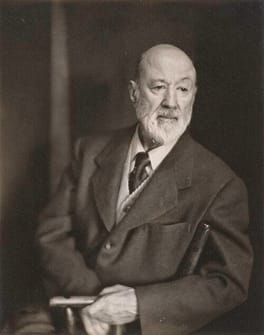
Photo: Clara Sipprell / Public domain (source: Wikimedia Commons)
Born on October 20, 1874, Charles Ives was from Danbury, Connecticut, United States. Public records list Charles Ives as an actuary and composer. Death is recorded on May 19, 1954, at the age of 79. Education on record includes Yale University. Recorded honors include Pulitzer Prize for Music (1947).
My Take
Charles Ives is one of the most genuinely fascinating figures in all of American music, and honestly he deserves way more name recognition than he gets outside classical circles. Here was a guy who spent his days crunching actuarial tables at an insurance company and his nights writing music that was decades ahead of its time — layered dissonances, polytonality, colliding march bands, hymns crashing into each other like he was soundtracking the chaos of American life itself. His peers had no idea what to make of him, and he barely cared; he just kept writing. The Pulitzer for Symphony No. 3 finally arrived in 1947 when he was 72, which is both wonderful and a little heartbreaking. A genuine American original who had to wait a lifetime for the world to catch up.
This take was written by generative AI, one per person, from publicly reported facts (editorial policy). It is a reading of the record, not reporting.
1. Profile
- Name (English)
- Charles Ives
- Name (Japanese)
- チャールズ・アイヴズ
- Reading
- ちゃーるず・あいゔず
- Born
- October 20, 1874 – May 19, 1954
- Origin
- Danbury, Connecticut, United States
- Occupation
- actuary / composer
- Zodiac / Chinese zodiac
- Libra / Dog
2. Background
- University
- Yale University
Awards & achievements
- 1947 Pulitzer Prize for Music
3. Works & records
Filmography / notable works
| Category | Title |
|---|---|
| Notable work | Variations on "America" |
| Notable work | Symphony No. 3 |
4. Links
- Official sitehttps://charlesives.org
- Wikipedia (English)https://en.wikipedia.org/wiki/Charles%20Ives
- Wikipedia (Japanese)https://ja.wikipedia.org/wiki/%E3%83%81%E3%83%A3%E3%83%BC%E3%83%AB%E3%82%BA%E3%83%BB%E3%82%A2%E3%82%A4%E3%83%B4%E3%82%BA
- Wikidatahttps://www.wikidata.org/wiki/Q309648
5. About this entry
Tags
- Last updated
Only publicly available facts are listed; non-public or unconfirmed items are omitted. Base data was compiled from Wikidata from June 2026 onward; ages are recalculated daily and deaths are checked against Wikidata on an ongoing basis. English text is machine-assisted (facts translated by Sonnet, "My Take" written by Opus 4.8). The Japanese page is the source of record.
Frequently asked questions
When was Charles Ives born?
Charles Ives was born on October 20, 1874.
When did Charles Ives die?
Charles Ives died on May 19, 1954, aged 79.
Where was Charles Ives from?
Charles Ives was from Danbury, Connecticut, United States.
What did Charles Ives do?
Charles Ives worked as actuary, composer.
Where did Charles Ives study?
Charles Ives attended Yale University.
What was Charles Ives known for?
Charles Ives's notable works include Variations on "America", Symphony No. 3.
Composer — see all → · More people from the United States → · More people born on October 20 →