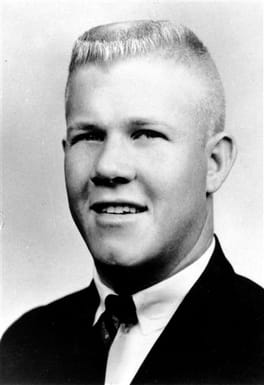
Photo: University of Texas / Public domain (source: Wikimedia Commons)
Charles Whitman was a mass murderer, spree killer and sniper. Charles Whitman was born in Lake Worth Beach, Florida, United States on June 24, 1941. Death is recorded on August 1, 1966, at the age of 25. Schooling on record includes University of Texas at Austin. Listed accolades include Eagle Scout.
My Take
Charles Whitman is remembered not as a celebrity but as a grim milestone in American history — the man who climbed the University of Texas tower on August 1, 1966, and opened fire on the campus below; counting his mother and wife, whom he had killed hours earlier, he killed 17 people and wounded 31 others before being shot dead by police. What makes his case so deeply unsettling, even decades later, is the contrast: Eagle Scout, Marine, seemingly all-American young man from Lake Worth, Florida. An autopsy later revealed a brain tumor, which sparked decades of debate about how much, if anything, it influenced his actions. Whitman essentially forced America to confront the reality of mass public shootings at a moment when no framework existed for them, and that tragic "first" is the only legacy he left behind.
This take was written by generative AI, one per person, from publicly reported facts (editorial policy). It is a reading of the record, not reporting.
1. Profile
- Name (English)
- Charles Whitman
- Name (Japanese)
- チャールズ・ホイットマン
- Reading
- ちゃーるず・ほいっとまん
- Born
- June 24, 1941 – August 1, 1966
- Origin
- Lake Worth Beach, Florida, United States
- Occupation
- mass murderer / spree killer / sniper
- Zodiac / Chinese zodiac
- Cancer / Snake
2. Background
- University
- University of Texas at Austin
Awards & achievements
- Eagle Scout
3. Links
4. About this entry
Tags
- Last updated
Only publicly available facts are listed; non-public or unconfirmed items are omitted. Base data was compiled from Wikidata from June 2026 onward; ages are recalculated daily and deaths are checked against Wikidata on an ongoing basis. English text is machine-assisted (facts translated by Sonnet, "My Take" written by Opus 4.8). The Japanese page is the source of record.
Frequently asked questions
When was Charles Whitman born?
Charles Whitman was born on June 24, 1941.
When did Charles Whitman die?
Charles Whitman died on August 1, 1966, aged 25.
Where was Charles Whitman from?
Charles Whitman was from Lake Worth Beach, Florida, United States.
What did Charles Whitman do?
Charles Whitman worked as mass murderer, spree killer, sniper.
Where did Charles Whitman study?
Charles Whitman attended University of Texas at Austin.
More people from the United States → · More people born on June 24 →