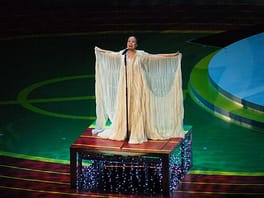
Photo: Tksteven / CC BY-SA 3.0 (source: Wikimedia Commons)
Dadawa was born on July 15, 1968 in Guangzhou, People's Republic of China and is credited as a singer and composer. That puts Dadawa at 58 years old in 2026. Education on record includes Guangzhou University.
My Take
Dadawa, or Zhu Zheqin, is the kind of artist who expands your sense of what music can be. A Guangzhou-born singer and composer, she treats the voice as raw material, and with Sister Drum in 1995 she became the first Chinese musician to release her music globally. The detail I keep returning to is her role as a UNDP Goodwill Ambassador and her sound lab at a Shanghai university, signs that she sees music as something to connect people, not just perform. I have a real soft spot for artists who step lightly over borders and conventions, and she does exactly that with quiet, deliberate purpose.
This take was written by generative AI, one per person, from publicly reported facts (editorial policy). It is a reading of the record, not reporting.
1. Profile
- Name (English)
- Dadawa
- Name (Japanese)
- ダダワ
- Reading
- だだわ
- Born
- July 15, 1968 (age 58)
- Origin
- Guangzhou, People's Republic of China
- Occupation
- singer / composer
- Zodiac / Chinese zodiac
- Cancer / Monkey
2. Background
- University
- Guangzhou University
3. Links
- Wikipedia (English)https://en.wikipedia.org/wiki/Dadawa
- Wikipedia (Japanese)https://ja.wikipedia.org/wiki/%E3%83%80%E3%83%80%E3%83%AF
- Wikidatahttps://www.wikidata.org/wiki/Q1063910
4. About this entry
Tags
- Last updated
Facts are limited to publicly available information up to 2024; non-public or unconfirmed items are omitted. English text is machine-assisted (facts translated by Sonnet, "My Take" written by Opus 4.8). The Japanese page is the source of record.
Frequently asked questions
When was Dadawa born?
Dadawa was born on July 15, 1968 and is 58 years old.
Where is Dadawa from?
Dadawa is from Guangzhou, People's Republic of China.
What does Dadawa do?
Dadawa works as singer, composer.
Where did Dadawa study?
Dadawa attended Guangzhou University.
Singer — see all → · Composer — see all → · More people from the People's Republic of China → · More people born on July 15 →