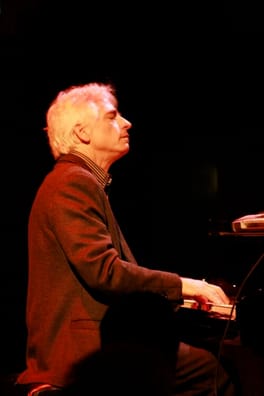
Photo: Werner Nieke / CC BY-SA 2.0 (source: Wikimedia Commons)
My Take
Benoit walks a line that snobs love to dismiss, contemporary jazz, but he does it with genuine craft and a real lineage. His devotion to keeping Vince Guaraldi's Peanuts music alive is a labor of love that connects generations of listeners to jazz piano, and that matters more than critics admit. His own playing is clean, melodic, and harmonically smart, the kind that draws people in rather than showing off. I also respect his move into orchestral conducting, which shows ambition beyond the smooth-jazz lane. He is a gateway artist for a lot of people, and the world needs more musicians who can open that door so gracefully.
This take was written by generative AI, one per person, from publicly reported facts (editorial policy). It is a reading of the record, not reporting.
Overview
David Benoit is an American jazz pianist, composer, and conductor regarded as a prominent figure in contemporary and smooth jazz. Born in Bakersfield, California, he has released a long string of charting albums and is widely known for performing and recording the Vince Guaraldi music associated with the Peanuts television specials. He has also worked extensively as an arranger and orchestral conductor.
1. Profile
- Name (English)
- David Benoit
- Name (Japanese)
- デイヴィッド・ベノワ
- Reading
- でいゔぃっど・べのわ
- Born
- August 18, 1953 (age 73)
- Origin
- Bakersfield, California, United States
- Occupation
- Pianist / Jazz musician / Composer / Bandleader / Conductor
- Zodiac / Chinese zodiac
- Leo / Snake
2. Links
- Official sitehttp://www.benoit.com/
- Xhttps://x.com/dbmusic
- Wikipedia (English)https://en.wikipedia.org/wiki/David%20Benoit
- Wikipedia (Japanese)https://ja.wikipedia.org/wiki/%E3%83%87%E3%82%A4%E3%83%B4%E3%82%A3%E3%83%83%E3%83%89%E3%83%BB%E3%83%99%E3%83%8E%E3%83%AF
- Wikidatahttps://www.wikidata.org/wiki/Q405208
3. About this entry
Tags
- Last updated
Facts are limited to publicly available information up to 2024; non-public or unconfirmed items are omitted. English text is machine-assisted (facts translated by Sonnet, "My Take" written by Opus 4.8). The Japanese page is the source of record.
Frequently asked questions
When was David Benoit born?
Born August 18, 1953 (age 73).
Where is David Benoit from?
David Benoit is from Bakersfield, California, United States.
What does David Benoit do?
David Benoit works as Pianist, Jazz musician, Composer, Bandleader, Conductor.
Pianist — see all → · Jazz musician — see all → · More people from the United States →