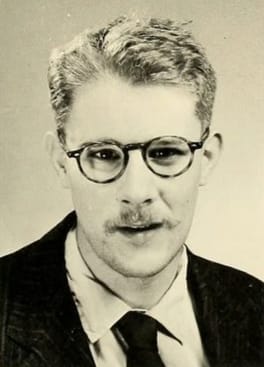
Photo: Unknown author / Public domain (source: Wikimedia Commons)
My Take
Lewis is one of those thinkers whose ideas sound like science fiction until you realize he meant every word. Modal realism, the claim that every possible world genuinely exists, is the kind of bold metaphysical commitment most philosophers flinch from, and he defended it with relentless rigor and a famously clear prose style. What I admire most is the breadth: counterfactuals, conventions of language, the mind, possibility itself, all handled with the same precision. He made systematic metaphysics respectable again in an era skeptical of grand theorizing, and you still cannot get through a serious metaphysics seminar without running into his name.
This take was written by generative AI, one per person, from publicly reported facts (editorial policy). It is a reading of the record, not reporting.
Overview
David Kellogg Lewis (1941-2001) was an American philosopher widely regarded as one of the most important analytic philosophers of the 20th century. He is best known for his defense of modal realism, the view that all possible worlds are as real and concrete as the actual world, set out in his book On the Plurality of Worlds. He held a professorship at Princeton University and contributed influential work across metaphysics, philosophy of language, philosophy of mind, and the philosophy of probability.
1. Profile
- Name (English)
- David Lewis
- Name (Japanese)
- デイヴィド・ルイス
- Reading
- でいゔぃど・るいす
- Born
- September 28, 1941 – October 14, 2001
- Origin
- Oberlin, Ohio, United States
- Occupation
- Philosopher
- Zodiac / Chinese zodiac
- Libra / Snake
2. Background
- University
- Harvard University
3. Links
4. About this entry
Tags
- Last updated
Facts are limited to publicly available information up to 2024; non-public or unconfirmed items are omitted. English text is machine-assisted (facts translated by Sonnet, "My Take" written by Opus 4.8). The Japanese page is the source of record.
Frequently asked questions
When was David Lewis born?
Born September 28, 1941.
When did David Lewis die?
Died October 14, 2001, aged 60.
Where was David Lewis from?
David Lewis was from Oberlin, Ohio, United States.
What did David Lewis do?
David Lewis worked as Philosopher.
Philosopher — see all → · More people from the United States →