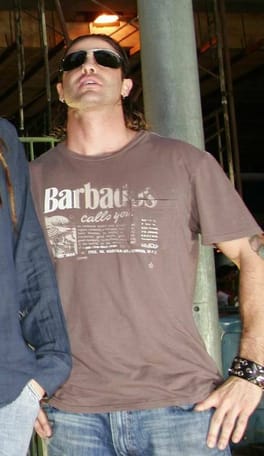
Photo: Sry85 / CC BY 2.5 (source: Wikimedia Commons)
My Take
Silveria is one of those drummers whose feel you recognize instantly even if you can't name him. His pocket on early Korn records, that loose, swinging groove under all the detuned chaos, is what made tracks like 'Blind' and 'Freak on a Leash' actually move instead of just churn. He came up as a teenager and basically grew up in public alongside one of the biggest metal bands of the era. I always thought he was underrated as the rhythmic glue of that lineup, and the band's groove genuinely shifted once he was gone. A quiet anchor in a very loud band.
This take was written by generative AI, one per person, from publicly reported facts (editorial policy). It is a reading of the record, not reporting.
Overview
David Silveria is an American drummer best known as a founding member of the nu metal band Korn, which he co-founded in Bakersfield, California in 1993. He played on the band's first seven studio albums, helping define their groove-heavy, downtuned sound during their commercial peak. He stepped away from the band in the mid-2000s and later pursued other musical projects.
1. Profile
- Name (English)
- David Silveria
- Name (Japanese)
- デイヴィッド・シルヴェリア
- Reading
- でいゔぃっど・しるゔぇりあ
- Born
- September 21, 1972 (age 54)
- Origin
- San Leandro, California, United States
- Occupation
- Drummer
- Zodiac / Chinese zodiac
- Virgo / Rat
2. Links
3. About this entry
Tags
- Last updated
Facts are limited to publicly available information up to 2024; non-public or unconfirmed items are omitted. English text is machine-assisted (facts translated by Sonnet, "My Take" written by Opus 4.8). The Japanese page is the source of record.
Frequently asked questions
When was David Silveria born?
Born September 21, 1972 (age 54).
Where is David Silveria from?
David Silveria is from San Leandro, California, United States.
What does David Silveria do?
David Silveria works as Drummer.