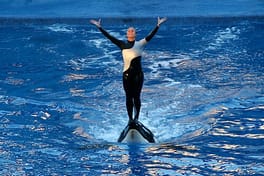
Photo: Ed Schipul from Houston, TX, US / CC BY-SA 2.0 (source: Wikimedia Commons)
Dawn Brancheau was born in Cedar Lake, Indiana, United States on April 16, 1969. Dawn Brancheau was an entertainer. Death is recorded on February 24, 2010, at the age of 40. Education on record includes Andrean High School and University of South Carolina.
My Take
Dawn Brancheau is one of those people whose story genuinely stays with you. She spent fifteen years at SeaWorld Orlando building real bonds with orcas — not just going through the motions, but throwing herself into it so fully that she became the face of the whole Shamu show. Growing up in Indiana, going to the University of South Carolina, and landing at SeaWorld says a lot about someone who knew exactly what she loved and chased it without compromise. The footage of her working with those animals radiates pure joy, and you can tell she wasn't performing enthusiasm — she actually had it. Her death in February 2010, at just forty years old, was devastating, and it set off a years-long conversation about captive orca welfare that still echoes today. I think that's part of her legacy too: she didn't just entertain people, she made them care about these animals in the first place.
This take was written by generative AI, one per person, from publicly reported facts (editorial policy). It is a reading of the record, not reporting.
1. Profile
- Name (English)
- Dawn Brancheau
- Name (Japanese)
- ドーン・ブランショ
- Reading
- どーん・ぶらんしょ
- Born
- April 16, 1969 – February 24, 2010
- Origin
- Cedar Lake, Indiana, United States
- Occupation
- entertainer
- Zodiac / Chinese zodiac
- Aries / Rooster
2. Background
- High school
- Andrean High School
- University
- University of South Carolina
3. Links
4. About this entry
Tags
- Last updated
Only publicly available facts are listed; non-public or unconfirmed items are omitted. Base data was compiled from Wikidata from June 2026 onward; ages are recalculated daily and deaths are checked against Wikidata on an ongoing basis. English text is machine-assisted (facts translated by Sonnet, "My Take" written by Opus 4.8). The Japanese page is the source of record.
Frequently asked questions
When was Dawn Brancheau born?
Dawn Brancheau was born on April 16, 1969.
When did Dawn Brancheau die?
Dawn Brancheau died on February 24, 2010, aged 40.
Where was Dawn Brancheau from?
Dawn Brancheau was from Cedar Lake, Indiana, United States.
What did Dawn Brancheau do?
Dawn Brancheau worked as entertainer.
Where did Dawn Brancheau study?
Dawn Brancheau attended University of South Carolina.
Entertainer — see all → · More people from the United States → · More people born on April 16 →