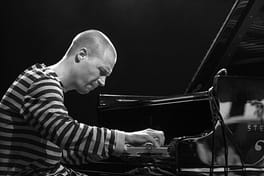
Photo: Geert Vandepoele from Gent, Belgium / CC BY-SA 2.0 (source: Wikimedia Commons)
Esbjörn Svensson was a jazz pianist, composer and jazz musician, born on April 16, 1964 in Västerås, Västmanland County, Sweden. Esbjörn Svensson died on June 14, 2008, aged 44. Schooling on record includes Royal College of Music in Stockholm. Recorded honors include Gyllene Skivan (2003).
My Take
Svensson is the artist on this list I find most haunting. Through his trio e.s.t. he made jazz feel urgent and contemporary again, folding classical structure and rock energy into something that pulled in listeners far younger than the usual jazz crowd, and he became one of Europe's biggest jazz names at the turn of the century. His death at 44 in a 2008 diving accident is one of those losses that still stings; you hear the unfinished trajectory in every recording. To me he captured a cool, luminous Nordic beauty in sound, and I keep wondering where he would have taken it.
This take was written by generative AI, one per person, from publicly reported facts (editorial policy). It is a reading of the record, not reporting.
1. Profile
- Name (English)
- Esbjörn Svensson
- Name (Japanese)
- エスビョルン・スヴェンソン
- Reading
- えすびょるん・すゔぇんそん
- Born
- April 16, 1964 – June 14, 2008
- Origin
- Västerås, Västmanland County, Sweden
- Occupation
- jazz pianist / composer / jazz musician / pianist
- Zodiac / Chinese zodiac
- Aries / Dragon
2. Background
- University
- Royal College of Music in Stockholm
Awards & achievements
- 2003 Gyllene Skivan
3. Links
- Official sitehttp://www.est-music.com/
- Wikipedia (English)https://en.wikipedia.org/wiki/Esbj%C3%B6rn%20Svensson
- Wikipedia (Japanese)https://ja.wikipedia.org/wiki/%E3%82%A8%E3%82%B9%E3%83%93%E3%83%A7%E3%83%AB%E3%83%B3%E3%83%BB%E3%82%B9%E3%83%B4%E3%82%A7%E3%83%B3%E3%82%BD%E3%83%B3
- Wikidatahttps://www.wikidata.org/wiki/Q433733
4. About this entry
Tags
- Last updated
Facts are limited to publicly available information up to 2024; non-public or unconfirmed items are omitted. English text is machine-assisted (facts translated by Sonnet, "My Take" written by Opus 4.8). The Japanese page is the source of record.
Frequently asked questions
When was Esbjörn Svensson born?
Born April 16, 1964.
When did Esbjörn Svensson die?
Died June 14, 2008, aged 44.
Where was Esbjörn Svensson from?
Esbjörn Svensson was from Västerås, Västmanland County, Sweden.
What did Esbjörn Svensson do?
Esbjörn Svensson worked as jazz pianist, composer, jazz musician, pianist.
Jazz pianist — see all → · Composer — see all → · More people from Sweden →