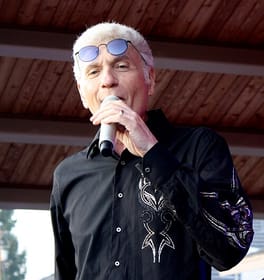
Photo: Jessie Pearl / CC BY 2.0 (source: Wikimedia Commons)
Dennis DeYoung was born on February 18, 1947 in Chicago, Illinois, United States and is credited as a singer, singer-songwriter and pianist. As of 2026, Dennis DeYoung is 79 years old. Education on record includes Harlan Community Academy High School.
My Take
Dennis DeYoung is the theatrical heart of Styx, and I mean that as high praise. As the band's most prolific writer and primary voice from 1972 to 1999, he gave their arena rock a melodramatic, piano-driven storytelling streak that critics sometimes mocked but audiences adored. What I love is the streak of genuine pathos beneath the bombast; his songs feel staged in the best sense, like miniature musicals. A Chicago kid with an unmistakably idiosyncratic vision, he never let craft slip into mere spectacle. Decades on, his songwriting still holds up, and I have lasting respect for an artist that committed to his own dramatic, unfashionable instincts.
This take was written by generative AI, one per person, from publicly reported facts (editorial policy). It is a reading of the record, not reporting.
1. Profile
- Name (English)
- Dennis DeYoung
- Name (Japanese)
- デニス・デ・ヤング
- Reading
- でにす・で・やんぐ
- Born
- February 18, 1947 (age 79)
- Origin
- Chicago, Illinois, United States
- Occupation
- singer / singer-songwriter / pianist / record producer / composer
- Zodiac / Chinese zodiac
- Aquarius / Boar
2. Background
- High school
- Harlan Community Academy High School
3. Links
- Official sitehttps://www.dennisdeyoung.com/
- Wikipedia (English)https://en.wikipedia.org/wiki/Dennis%20DeYoung
- Wikidatahttps://www.wikidata.org/wiki/Q1189081
4. About this entry
Tags
- Last updated
Facts are limited to publicly available information up to 2024; non-public or unconfirmed items are omitted. English text is machine-assisted (facts translated by Sonnet, "My Take" written by Opus 4.8). The Japanese page is the source of record.
Frequently asked questions
When was Dennis DeYoung born?
Dennis DeYoung was born on February 18, 1947 and is 79 years old.
Where is Dennis DeYoung from?
Dennis DeYoung is from Chicago, Illinois, United States.
What does Dennis DeYoung do?
Dennis DeYoung works as singer, singer-songwriter, pianist, record producer, composer.
Which high school did Dennis DeYoung attend?
Dennis DeYoung attended Harlan Community Academy High School.
Singer — see all → · Singer-songwriter — see all → · More people from the United States → · More people born on February 18 →