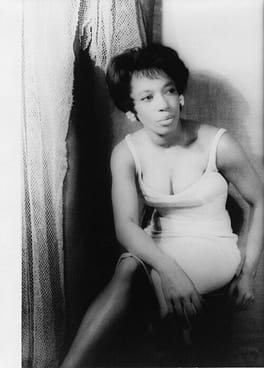
Photo: Carl Van Vechten / Public domain (source: Wikimedia Commons)
Diana Sands was listed as a stage actor, television actor and film actor. Diana Sands was born in New York City, New York, United States on August 22, 1934. Death is recorded on September 21, 1973, at the age of 39. Education on record includes High School of Music & Art. Listed accolades include Theatre World Award (1963).
My Take
Diana Sands deserves to be a household name, and the fact that she largely isn't says more about her era than her talent. Her Beneatha in A Raisin in the Sun, opposite Sidney Poitier, was a landmark, and her 1963 Theatre World Award only hints at her range across stage, film, and television. As a Black actress carving out serious dramatic roles in the 1960s, she fought a steep, unfair road and won on merit. Her death at 39 in 1973 robbed us of decades of work. I hold real reverence for trailblazers like her who widened the stage for everyone after.
This take was written by generative AI, one per person, from publicly reported facts (editorial policy). It is a reading of the record, not reporting.
1. Profile
- Name (English)
- Diana Sands
- Name (Japanese)
- ダイアナ・サンズ
- Reading
- だいあな・さんず
- Born
- August 22, 1934 – September 21, 1973
- Origin
- New York City, New York, United States
- Occupation
- actor / stage actor / television actor / film actor
- Zodiac / Chinese zodiac
- Leo / Dog
2. Background
- High school
- High School of Music & Art
Awards & achievements
- 1963 Theatre World Award
3. Links
- Wikipedia (English)https://en.wikipedia.org/wiki/Diana%20Sands
- Wikidatahttps://www.wikidata.org/wiki/Q5271295
4. About this entry
Tags
- Last updated
Facts are limited to publicly available information up to 2024; non-public or unconfirmed items are omitted. English text is machine-assisted (facts translated by Sonnet, "My Take" written by Opus 4.8). The Japanese page is the source of record.
Frequently asked questions
When was Diana Sands born?
Diana Sands was born on August 22, 1934.
When did Diana Sands die?
Diana Sands died on September 21, 1973, aged 39.
Where was Diana Sands from?
Diana Sands was from New York City, New York, United States.
What did Diana Sands do?
Diana Sands worked as actor, stage actor, television actor, film actor.
Which high school did Diana Sands attend?
Diana Sands attended High School of Music & Art.
Actor — see all → · Stage actor — see all → · More people from the United States → · More people born on August 22 →