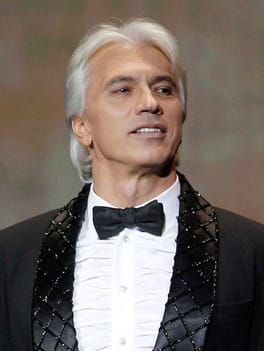
Photo: www.kremlin.ru / CC BY 4.0 (source: Wikimedia Commons)
Dmitry Khvorostovsky was an opera singer, born on October 16, 1962 in Krasnoyarsk, Russia. Dmitry Khvorostovsky died on November 22, 2017 at the age of 55. Recorded honors include People's Artist of the Russian Federation, Order of Alexander Nevsky, Merited Artist of the RSFSR and 4 more.
My Take
Dmitry Khvorostovsky is the kind of artist who makes me wish I had heard him live. A baritone out of Siberian Krasnoyarsk who became a global opera figure, decorated as a People's Artist of the Russian Federation, he carried both technical command and a striking stage presence. What moves me most is the arc cut short, he died in 2017 at just fifty-five after a brain tumour, yet kept performing with remarkable courage near the end. To me he represents the gravity of the Russian operatic tradition, a voice that bridged Soviet roots and the world's great stages without losing its distinct character.
This take was written by generative AI, one per person, from publicly reported facts (editorial policy). It is a reading of the record, not reporting.
1. Profile
- Name (English)
- Dmitry Khvorostovsky
- Name (Japanese)
- ディミトリー・ホロストフスキー
- Reading
- でぃみとりー・ほろすとふすきー
- Born
- October 16, 1962 – November 22, 2017
- Origin
- Krasnoyarsk, Russia
- Occupation
- opera singer
- Zodiac / Chinese zodiac
- Libra / Tiger
2. Background
Awards & achievements
- People's Artist of the Russian Federation
- Order of Alexander Nevsky
- Merited Artist of the RSFSR
- Medal of Honor "For merits in the protection of children of Russia"
- 1991 Glinka State Prize of the RSFSR
- honorary citizen of Kemerovo Oblast
- Order "For Merit to the Fatherland", 4th class
3. Links
- Official sitehttps://hvorostovsky.com/
- Instagramhttps://www.instagram.com/hvorostovsky/
- Wikipedia (English)https://en.wikipedia.org/wiki/Dmitri%20Hvorostovsky
- Wikipedia (Japanese)https://ja.wikipedia.org/wiki/%E3%83%87%E3%82%A3%E3%83%9F%E3%83%88%E3%83%AA%E3%83%BC%E3%83%BB%E3%83%9B%E3%83%AD%E3%82%B9%E3%83%88%E3%83%95%E3%82%B9%E3%82%AD%E3%83%BC
- Wikidatahttps://www.wikidata.org/wiki/Q333201
4. About this entry
Tags
- Last updated
Facts are limited to publicly available information up to 2024; non-public or unconfirmed items are omitted. English text is machine-assisted (facts translated by Sonnet, "My Take" written by Opus 4.8). The Japanese page is the source of record.
Frequently asked questions
When was Dmitry Khvorostovsky born?
Born October 16, 1962.
When did Dmitry Khvorostovsky die?
Died November 22, 2017, aged 55.
Where was Dmitry Khvorostovsky from?
Dmitry Khvorostovsky was from Krasnoyarsk, Russia.
What did Dmitry Khvorostovsky do?
Dmitry Khvorostovsky worked as opera singer.