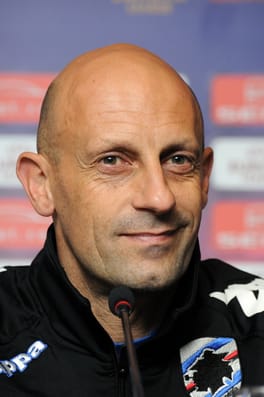
Photo: Дмитрий Неймырок / CC BY-SA 3.0 (source: Wikimedia Commons)
Public records list Domenico Di Carlo as an association football player and association football coach. Domenico Di Carlo was born in Cassino, Province of Frosinone, Italy on March 23, 1964. The age as of 2026 is 62. The listed height is 179 cm.
My Take
Mimmo Di Carlo interests me as a man who has lived two football lives in one. First as a player, then as a coach steering Serie C side Gubbio, he has never really left the grass. I have a soft spot for managers who grind it out at provincial clubs rather than chasing prestige, because that is where football's character actually gets built. Coming out of Cassino in the Frosinone region, he reads to me as a self-made lifer, the type who turns modest squads into competitive ones. Devotion that survives the jump from boots to clipboard earns my respect every time.
This take was written by generative AI, one per person, from publicly reported facts (editorial policy). It is a reading of the record, not reporting.
1. Profile
- Name (English)
- Domenico Di Carlo
- Name (Japanese)
- ドメニコ・ディ・カルロ
- Reading
- どめにこ・でぃ・かるろ
- Born
- March 23, 1964 (age 62)
- Origin
- Cassino, Province of Frosinone, Italy
- Height
- 179 cm
- Occupation
- association football player / association football coach
- Zodiac / Chinese zodiac
- Aries / Dragon
2. Links
3. About this entry
Tags
- Last updated
Facts are limited to publicly available information up to 2024; non-public or unconfirmed items are omitted. English text is machine-assisted (facts translated by Sonnet, "My Take" written by Opus 4.8). The Japanese page is the source of record.
Frequently asked questions
When was Domenico Di Carlo born?
Domenico Di Carlo was born on March 23, 1964 and is 62 years old.
Where is Domenico Di Carlo from?
Domenico Di Carlo is from Cassino, Province of Frosinone, Italy.
What does Domenico Di Carlo do?
Domenico Di Carlo works as association football player, association football coach.
How tall is Domenico Di Carlo?
Domenico Di Carlo is 179 cm tall.
Association football player — see all → · Association football coach — see all → · More people from Italy → · More people born on March 23 →