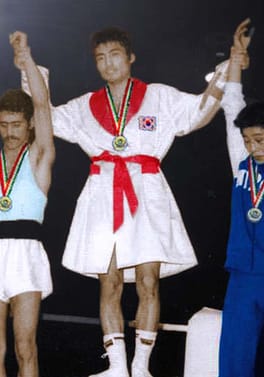
Photo: Unknown author / Public domain (source: Wikimedia Commons)
Born on March 23, 1957 in Busan, South Korea, Park Chan-Hee is a boxer. That puts Park Chan-Hee at 69 years old in 2026. Listed accolades include WBC World Flyweight Champion, The Ring World Flyweight Champion and The Ring magazine Progress of the Year (1979).
My Take
Park Chan-hee is a genuine hero of Korean boxing, and I have nothing but respect for him. He earned an Asian Games gold as an amateur and placed fifth at the 1976 Olympics before turning pro and capturing the WBC and lineal flyweight titles. The Ring even named him 1979 Progress of the Year. The flyweight division demands speed, technique, and sheer nerve all at once, and reaching the top there is no small feat. Champions like him, understated but iron-willed, are exactly the figures I think deserve to be remembered and retold to younger generations who never saw him fight.
This take was written by generative AI, one per person, from publicly reported facts (editorial policy). It is a reading of the record, not reporting.
1. Profile
- Name (English)
- Park Chan-Hee
- Name (Japanese)
- 朴賛希
- Reading
- ぱく・ちゃに
- Born
- March 23, 1957 (age 69)
- Origin
- Busan, South Korea
- Occupation
- boxer
- Zodiac / Chinese zodiac
- Aries / Rooster
2. Background
Awards & achievements
- WBC World Flyweight Champion
- The Ring World Flyweight Champion
- 1979 The Ring magazine Progress of the Year
3. Links
- Wikipedia (English)https://en.wikipedia.org/wiki/Park%20Chan-hee
- Wikipedia (Japanese)https://ja.wikipedia.org/wiki/%E6%9C%B4%E8%B3%9B%E5%B8%8C
- Wikidatahttps://www.wikidata.org/wiki/Q624340
4. About this entry
Tags
- Last updated
Facts are limited to publicly available information up to 2024; non-public or unconfirmed items are omitted. English text is machine-assisted (facts translated by Sonnet, "My Take" written by Opus 4.8). The Japanese page is the source of record.
Frequently asked questions
When was Park Chan-Hee born?
Born March 23, 1957 (age 69).
Where is Park Chan-Hee from?
Park Chan-Hee is from Busan, South Korea.
What does Park Chan-Hee do?
Park Chan-Hee works as boxer.