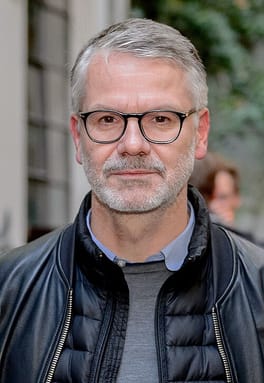
Photo: Stephan Röhl for Heinrich-Böll-Stiftung from Berlin, Deutschland / CC BY-SA 2.0 (source: Wikimedia Commons)
Public records list Durs Grünbein as a writer, translator and poet. Durs Grünbein was born on October 9, 1962 in Dresden, Saxony, Germany. That works out to 63 years old in 2026. Recorded honors include Georg Büchner Prize (1995), Knight Commander's Cross of the Order of Merit of the Federal Republic of Germany (2009), Pour le Mérite for Sciences and Arts order (2008) and 5 more. Notable works include On Snow and Erklärte Nacht.
My Take
Grünbein is one of those figures who reminds me how thin the bridge is between languages. Winning the Georg Büchner Prize at thirty-two marks him as a major voice in German letters, yet outside Europe he is almost invisible. I find that gap fascinating rather than sad. Being shaped by Dresden, a city defined by destruction and rebuilding, surely sharpened his eye for memory and ruin. I admire poets who treat history as raw material rather than decoration, and everything about his trajectory suggests he belongs to that demanding tradition. He is worth seeking out.
This take was written by generative AI, one per person, from publicly reported facts (editorial policy). It is a reading of the record, not reporting.
1. Profile
- Name (English)
- Durs Grünbein
- Name (Japanese)
- ドゥルス・グリューンバイン
- Reading
- どぅるす・ぐりゅーんばいん
- Born
- October 9, 1962 (age 63)
- Origin
- Dresden, Saxony, Germany
- Occupation
- writer / translator / poet / university teacher / librettist
- Zodiac / Chinese zodiac
- Libra / Tiger
2. Background
Awards & achievements
- 1995 Georg Büchner Prize
- 2009 Knight Commander's Cross of the Order of Merit of the Federal Republic of Germany
- 2008 Pour le Mérite for Sciences and Arts order
- 2009 Samuel-Bogumil-Linde prize
- 2006 Berliner Literaturpreis
- 2004 Friedrich Nietzsche Prize
- 1993 Nicolas Born Prize for Lyrics
- 1995 Peter-Huchel-Preis
3. Works & records
Filmography / notable works
| Category | Title |
|---|---|
| Notable work | On Snow |
| Notable work | Erklärte Nacht |
4. Links
5. About this entry
Tags
- Last updated
Facts are limited to publicly available information up to 2024; non-public or unconfirmed items are omitted. English text is machine-assisted (facts translated by Sonnet, "My Take" written by Opus 4.8). The Japanese page is the source of record.
Frequently asked questions
When was Durs Grünbein born?
Born October 9, 1962 (age 63).
Where is Durs Grünbein from?
Durs Grünbein is from Dresden, Saxony, Germany.
What does Durs Grünbein do?
Durs Grünbein works as writer, translator, poet, university teacher, librettist.
What is Durs Grünbein known for?
Notable works include On Snow, Erklärte Nacht.
Writer — see all → · Translator — see all → · More people from Germany →