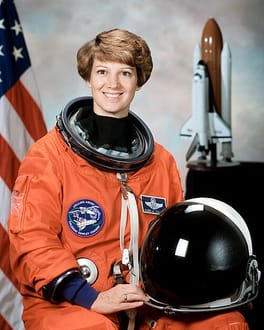
Photo: Robert Markowitz / Public domain (source: Wikimedia Commons)
Eileen Collins was born on November 19, 1956 in Elmira, New York, United States. Eileen Collins is listed as an air force officer, Granjeras and aircraft pilot. The age as of 2026 is 69. Education on record includes Syracuse University. Recorded honors include Distinguished Flying Cross, Knight of the Legion of Honour, Harmon Trophy and 5 more.
My Take
What strikes me most about Eileen Collins is how quietly historic her career is. Becoming the first woman to pilot and then command a Space Shuttle isn't just a milestone on a list of medals; it's a door held open for everyone who came after. I admire that her path ran through test-pilot rigor rather than spectacle, the Distinguished Flying Cross and Legion of Honour sitting beside hall-of-fame inductions almost as afterthoughts. To me, Collins represents the best kind of pioneer: disciplined, understated, and more interested in the mission than the glory. She earned her place in the sky.
This take was written by generative AI, one per person, from publicly reported facts (editorial policy). It is a reading of the record, not reporting.
1. Profile
- Name (English)
- Eileen Collins
- Name (Japanese)
- アイリーン・コリンズ
- Reading
- あいりーん・こりんず
- Born
- November 19, 1956 (age 69)
- Origin
- Elmira, New York, United States
- Occupation
- air force officer / Granjeras / aircraft pilot / astronaut
- Zodiac / Chinese zodiac
- Scorpio / Monkey
2. Background
- University
- Syracuse University
Awards & achievements
- Distinguished Flying Cross
- Knight of the Legion of Honour
- Harmon Trophy
- 1995 National Women's Hall of Fame
- Women in Aviation International
- 2009 National Aviation Hall of Fame
- United States Astronaut Hall of Fame
- 2006 Women in Space Science Award
3. Links
4. About this entry
Tags
- Last updated
Facts are limited to publicly available information up to 2024; non-public or unconfirmed items are omitted. English text is machine-assisted (facts translated by Sonnet, "My Take" written by Opus 4.8). The Japanese page is the source of record.
Frequently asked questions
When was Eileen Collins born?
Eileen Collins was born on November 19, 1956 and is 69 years old.
Where is Eileen Collins from?
Eileen Collins is from Elmira, New York, United States.
What does Eileen Collins do?
Eileen Collins works as air force officer, Granjeras, aircraft pilot, astronaut.
Where did Eileen Collins study?
Eileen Collins attended Syracuse University.
More people from the United States → · More people born on November 19 →