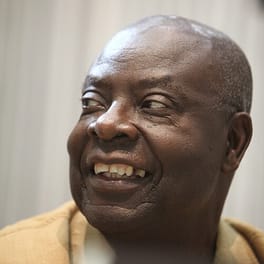
Photo: Rama / CC BY-SA 2.0 fr (source: Wikimedia Commons)
Emmanuel Dongala is listed as a writer. Emmanuel Dongala was born in Brazzaville, Republic of the Congo on July 14, 1941. The age as of 2026 is 85. Education on record includes Rutgers University. Awards on record include Guggenheim Fellowship (1999) and Grand prix littéraire en poésie d'Afrique noire (1988).
My Take
Emmanuel Dongala fascinates me because he refuses to be one thing. A chemist specializing in stereochemistry and environmental toxicology who is also a celebrated novelist giving voice to Congolese experience, he lives a dual life most of us could only manage half of. Born in Brazzaville and later teaching in the United States, he carried his homeland's turbulence into literature while keeping a rigorous scientific mind. The Guggenheim Fellowship and the major African literature prize confirm what the biography hints at: real excellence on both fronts. I have deep admiration for people who hold the analytical and the artistic in the same hands, and Dongala does it with rare grace.
This take was written by generative AI, one per person, from publicly reported facts (editorial policy). It is a reading of the record, not reporting.
1. Profile
- Name (English)
- Emmanuel Dongala
- Name (Japanese)
- エマニュエル・ドンガラ
- Reading
- えまにゅえる・どんがら
- Born
- July 14, 1941 (age 85)
- Origin
- Brazzaville, Republic of the Congo
- Occupation
- writer
- Zodiac / Chinese zodiac
- Cancer / Snake
2. Background
- University
- Rutgers University
Awards & achievements
- 1999 Guggenheim Fellowship
- 1988 Grand prix littéraire en poésie d'Afrique noire
3. Links
4. About this entry
Tags
- Last updated
Facts are limited to publicly available information up to 2024; non-public or unconfirmed items are omitted. English text is machine-assisted (facts translated by Sonnet, "My Take" written by Opus 4.8). The Japanese page is the source of record.
Frequently asked questions
When was Emmanuel Dongala born?
Born July 14, 1941 (age 85).
Where is Emmanuel Dongala from?
Emmanuel Dongala is from Brazzaville, Republic of the Congo.
What does Emmanuel Dongala do?
Emmanuel Dongala works as writer.