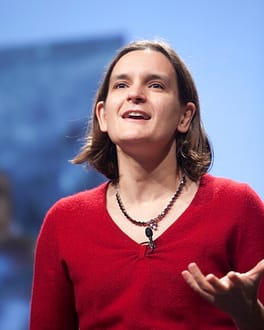
Photo: Kris Krüg / CC BY-SA 2.0 (source: Wikimedia Commons)
Esther Duflo is an economist, university teacher and researcher, born on October 25, 1972 in Paris, France. As of 2026, Esther Duflo is 53 years old. Listed accolades include Sloan Fellowship (2002), Elaine Bennett Research Prize (2002), Prix du meilleur jeune économiste de France (2005) and 5 more.
My Take
Esther Duflo is one of the few economists whose work I genuinely think changed how a whole field operates. Bringing randomized controlled trials into development economics took the discipline out of the seminar room and into the messy reality of poverty. The awards back it up, the John Bates Clark Medal, a MacArthur Fellowship, and the MIT professorship in poverty alleviation. What I find most striking is the Paris-to-MIT trajectory and the insistence on evidence over ideology. She makes economics feel like something you do, not just argue about, and that practical streak is exactly why her name carries weight.
This take was written by generative AI, one per person, from publicly reported facts (editorial policy). It is a reading of the record, not reporting.
1. Profile
- Name (English)
- Esther Duflo
- Name (Japanese)
- エスター・デュフロ
- Reading
- えすたー・でゅふろ
- Born
- October 25, 1972 (age 53)
- Origin
- Paris, France
- Occupation
- economist / university teacher / researcher
- Zodiac / Chinese zodiac
- Scorpio / Rat
2. Background
Awards & achievements
- 2002 Sloan Fellowship
- 2002 Elaine Bennett Research Prize
- 2005 Prix du meilleur jeune économiste de France
- 2005 CNRS bronze medal
- 2009 MacArthur Fellows Program
- 2010 John Bates Clark Medal
- 2010 Fellow of the Econometric Society
- 2010 Calvó-Armengol International Prize
3. Links
- Official sitehttp://econ-www.mit.edu/faculty/eduflo
- Wikipedia (English)https://en.wikipedia.org/wiki/Esther%20Duflo
- Wikipedia (Japanese)https://ja.wikipedia.org/wiki/%E3%82%A8%E3%82%B9%E3%83%86%E3%83%AB%E3%83%BB%E3%83%87%E3%83%A5%E3%83%95%E3%83%AD
- Wikidatahttps://www.wikidata.org/wiki/Q434509
4. About this entry
Tags
- Last updated
Facts are limited to publicly available information up to 2024; non-public or unconfirmed items are omitted. English text is machine-assisted (facts translated by Sonnet, "My Take" written by Opus 4.8). The Japanese page is the source of record.
Frequently asked questions
When was Esther Duflo born?
Born October 25, 1972 (age 53).
Where is Esther Duflo from?
Esther Duflo is from Paris, France.
What does Esther Duflo do?
Esther Duflo works as economist, university teacher, researcher.
Economist — see all → · University teacher — see all → · More people from France →