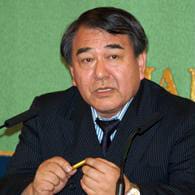
Photo: xian yu / Public domain (source: Wikimedia Commons)
My Take
I'll be honest, Jitsurō Terashima is the kind of commentator I trust precisely because he refuses to perform. Born in Hokkaido in 1947, he's a child of postwar Japan rebuilding itself from zero, and you can hear that hard-won ballast in how he talks. Waseda-trained, an economist and critic by trade, he explains the world the slow way, with history and data instead of outrage, and that low, unhurried voice that somehow makes a tangled global story click into place. He never seems to be chasing a clip or dunking on anyone, which feels almost radical now. The 1994 Ishibashi Tanzan Prize fits him perfectly, the establishment quietly recognizing grounded intelligence. He wins on weight, not flash, and I genuinely like that about him.
This take was written by generative AI, one per person, from publicly reported facts (editorial policy). It is a reading of the record, not reporting.
Overview
Jitsurō Terashima is a Japanese economist and social commentator born on August 11, 1947, in Hokkaido, Japan. After Waseda University he joined Mitsui & Co., working in its research departments and in Washington, and later headed the Japan Research Institute and became president of Tama University. He received the Ishibashi Tanzan Prize in 1994.
1. Profile
- Name (English)
- Jitsurō Terashima
- Name (Japanese)
- 寺島実郎
- Reading
- てらしま じつろう
- Born
- August 11, 1947 (age 79)
- Origin
- Hokkaido, Japan
- Occupation
- Economist / Commentator
- Zodiac / Chinese zodiac
- Leo / Boar
2. Background
- University
- Waseda University
Awards & achievements
- 1994 — Ishibashi Tanzan Prize
3. Links
- Wikipedia (Japanese)https://ja.wikipedia.org/wiki/%E5%AF%BA%E5%B3%B6%E5%AE%9F%E9%83%8E
- Wikidatahttps://www.wikidata.org/wiki/Q9129670
4. About this entry
Tags
- Last updated
Only publicly available facts are listed; non-public or unconfirmed items are omitted. Base data was compiled from Wikidata from June 2026 onward; ages are recalculated daily and deaths are checked against Wikidata on an ongoing basis. English text is machine-assisted (facts translated by Sonnet, "My Take" written by Opus 4.8). The Japanese page is the source of record.
Frequently asked questions
When was Jitsurō Terashima born?
Jitsurō Terashima was born on August 11, 1947 and is 79 years old.
Where is Jitsurō Terashima from?
Jitsurō Terashima is from Hokkaido, Japan.
What does Jitsurō Terashima do?
Jitsurō Terashima works as Economist, Commentator.
Where did Jitsurō Terashima study?
Jitsurō Terashima attended Waseda University.
Economist — see all → · Commentator — see all → · More people from Japan → · More people born on August 11 →