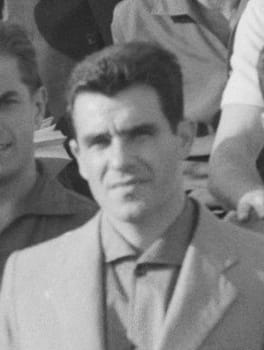
Photo: Bilsen, Joop van / Anefo / CC0 (source: Wikimedia Commons)
Evaristo de Macedo is listed as an association football player and association football coach. Evaristo de Macedo was born in Rio de Janeiro, Brazil on June 22, 1933. That works out to 93 years old in 2026. The listed height is 172 cm.
My Take
Born in Rio in 1933, Evaristo is the kind of figure who feels like living history. He came up as a sharp goalscorer in the golden postwar years of Brazilian football and then carried that knowledge into a long coaching life. I find something deeply moving about a player who stayed close to the game for so many decades, well past an age when most have stepped away entirely. The public record is thin, but that hardly diminishes the man; if anything it makes him more intriguing. My respect for someone who lived this much football is simply unconditional, and I tip my hat to him.
This take was written by generative AI, one per person, from publicly reported facts (editorial policy). It is a reading of the record, not reporting.
1. Profile
- Name (English)
- Evaristo de Macedo
- Name (Japanese)
- エヴァリスト・デ・マセド
- Reading
- えゔぁりすと・で・ませど
- Born
- June 22, 1933 (age 93)
- Origin
- Rio de Janeiro, Brazil
- Height
- 172 cm
- Occupation
- association football player / association football coach
- Zodiac / Chinese zodiac
- Cancer / Rooster
2. Links
3. About this entry
Tags
- Last updated
Facts are limited to publicly available information up to 2024; non-public or unconfirmed items are omitted. English text is machine-assisted (facts translated by Sonnet, "My Take" written by Opus 4.8). The Japanese page is the source of record.
Frequently asked questions
When was Evaristo de Macedo born?
Born June 22, 1933 (age 93).
Where is Evaristo de Macedo from?
Evaristo de Macedo is from Rio de Janeiro, Brazil.
What does Evaristo de Macedo do?
Evaristo de Macedo works as association football player, association football coach.
How tall is Evaristo de Macedo?
Evaristo de Macedo is 172 cm.
Association football player — see all → · Association football coach — see all → · More people from Brazil →