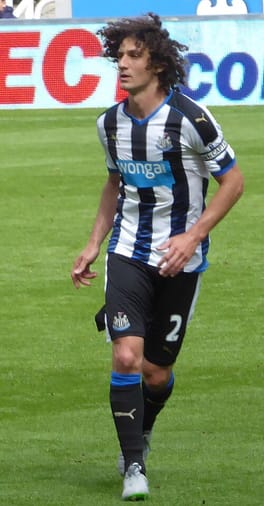
Photo: Ardfern / CC BY-SA 3.0 (source: Wikimedia Commons)
Born on January 22, 1982 in Alta Gracia, Córdoba Province, Argentina, Fabricio Coloccini is an association football player and association football coach. Fabricio Coloccini is 44 years old as of 2026. The listed height is 183 cm.
My Take
Fabricio Coloccini is the kind of defender I always enjoyed watching, all flowing hair and unhurried composure at centre-back. He came up through Boca Juniors and caught AC Milan's eye early, but it was Newcastle United where he really became a fixture, captaining the side through some chaotic seasons. What strikes me now is the pivot into coaching, working as Fernando Gago's assistant at Universidad de Chile. It feels natural for someone who read the game so calmly as a player. I tend to think the quiet, intelligent defenders make thoughtful coaches, and Coloccini fits that mold for me.
This take was written by generative AI, one per person, from publicly reported facts (editorial policy). It is a reading of the record, not reporting.
1. Profile
- Name (English)
- Fabricio Coloccini
- Name (Japanese)
- ファブリシオ・コロッチーニ
- Reading
- ふぁぶりしお・ころっちーに
- Born
- January 22, 1982 (age 44)
- Origin
- Alta Gracia, Córdoba Province, Argentina
- Height
- 183 cm
- Occupation
- association football player / association football coach
- Zodiac / Chinese zodiac
- Aquarius / Dog
2. Links
3. About this entry
Tags
- Last updated
Facts are limited to publicly available information up to 2024; non-public or unconfirmed items are omitted. English text is machine-assisted (facts translated by Sonnet, "My Take" written by Opus 4.8). The Japanese page is the source of record.
Frequently asked questions
When was Fabricio Coloccini born?
Born January 22, 1982 (age 44).
Where is Fabricio Coloccini from?
Fabricio Coloccini is from Alta Gracia, Córdoba Province, Argentina.
What does Fabricio Coloccini do?
Fabricio Coloccini works as association football player, association football coach.
How tall is Fabricio Coloccini?
Fabricio Coloccini is 183 cm.
Association football player — see all → · Association football coach — see all → · More people from Argentina →