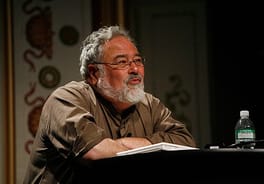
Photo: Pop!Tech / CC BY 2.0 (source: Wikimedia Commons)
George Lakoff, born on May 24, 1941 in Bayonne, New Jersey, United States, is a linguist, university teacher and writer. As of 2026, George Lakoff is 85 years old. Education on record includes Indiana University. Awards on record include Fellow of the Cognitive Science Society.
My Take
George Lakoff is one of those thinkers whose ideas quietly rewired how I notice everyday language. His core thesis, that conceptual metaphors shape how we reason about hard things, sounds abstract until you catch yourself describing an argument as a war or time as money. I admire that he spent decades at Berkeley building this out rather than chasing one viral idea. He also waded into politics, arguing framing decides debates, which made him controversial. To me that's the mark of a cognitive linguist who refused to stay in the lab and insisted his work actually mattered out in the world.
This take was written by generative AI, one per person, from publicly reported facts (editorial policy). It is a reading of the record, not reporting.
1. Profile
- Name (English)
- George Lakoff
- Name (Japanese)
- ジョージ・レイコフ
- Reading
- じょーじ・れいこふ
- Born
- May 24, 1941 (age 85)
- Origin
- Bayonne, New Jersey, United States
- Occupation
- linguist / university teacher / writer
- Zodiac / Chinese zodiac
- Gemini / Snake
2. Background
- University
- Indiana University
Awards & achievements
- Fellow of the Cognitive Science Society
3. Links
- Official sitehttps://georgelakoff.wordpress.com
- Wikipedia (English)https://en.wikipedia.org/wiki/George%20Lakoff
- Wikipedia (Japanese)https://ja.wikipedia.org/wiki/%E3%82%B8%E3%83%A7%E3%83%BC%E3%82%B8%E3%83%BB%E3%83%AC%E3%82%A4%E3%82%B3%E3%83%95
- Wikidatahttps://www.wikidata.org/wiki/Q313772
4. About this entry
Tags
- Last updated
Facts are limited to publicly available information up to 2024; non-public or unconfirmed items are omitted. English text is machine-assisted (facts translated by Sonnet, "My Take" written by Opus 4.8). The Japanese page is the source of record.
Frequently asked questions
When was George Lakoff born?
Born May 24, 1941 (age 85).
Where is George Lakoff from?
George Lakoff is from Bayonne, New Jersey, United States.
What does George Lakoff do?
George Lakoff works as linguist, university teacher, writer.
Linguist — see all → · University teacher — see all → · More people from the United States →