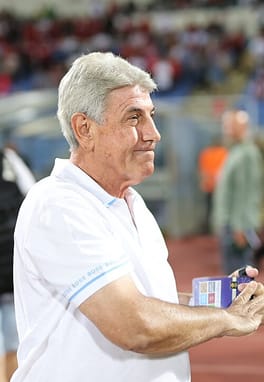
Photo: Biso / CC BY 4.0 (source: Wikimedia Commons)
Gjoko Hadžievski was born on March 31, 1955 in Bitola, North Macedonia. Gjoko Hadžievski is an association football player and association football coach. That works out to 71 years old in 2026.
My Take
What strikes me most about Gjoko Hadžievski is the sheer geographic ambition of his coaching life. Born in the former Yugoslavia in 1955, he has worked in North Macedonia, Bulgaria, Greece, Azerbaijan, Saudi Arabia, and even Japan with Júbilo Iwata. That kind of journeyman career demands a rare adaptability, the ability to read different football cultures and earn trust from players who speak entirely different languages. He is not a celebrity manager, and I find that honest. To me, figures like Hadžievski are the quiet connective tissue of the global game, carrying knowledge across borders and leaving a small mark on every dressing room they enter.
This take was written by generative AI, one per person, from publicly reported facts (editorial policy). It is a reading of the record, not reporting.
1. Profile
- Name (English)
- Gjoko Hadžievski
- Name (Japanese)
- ギョキッツァ・ハジェヴスキー
- Reading
- ぎょきっつぁ・はじぇゔすきー
- Born
- March 31, 1955 (age 71)
- Origin
- Bitola, North Macedonia
- Occupation
- association football player / association football coach
- Zodiac / Chinese zodiac
- Aries / Goat
2. Links
3. About this entry
Tags
- Last updated
Facts are limited to publicly available information up to 2024; non-public or unconfirmed items are omitted. English text is machine-assisted (facts translated by Sonnet, "My Take" written by Opus 4.8). The Japanese page is the source of record.
Frequently asked questions
When was Gjoko Hadžievski born?
Gjoko Hadžievski was born on March 31, 1955 and is 71 years old.
Where is Gjoko Hadžievski from?
Gjoko Hadžievski is from Bitola, North Macedonia.
What does Gjoko Hadžievski do?
Gjoko Hadžievski works as association football player, association football coach.
Association football player — see all → · Association football coach — see all → · More people from North Macedonia →