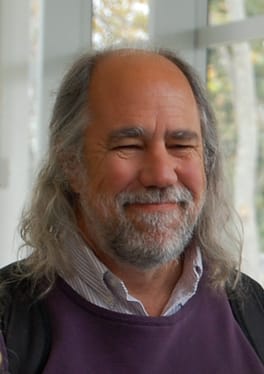
Photo: Grady_Booch,_CHM_2011_2.jpg: vonguard from Oakland, Nmibia derivative work: YMS / CC BY-SA 2.0 (source: Wikimedia Commons)
Grady Booch is a computer scientist, engineer and software developer, born on February 27, 1955 in Amarillo, Texas, United States. That puts Grady Booch at 71 years old in 2026. Education on record includes University of California, Santa Barbara. Awards on record include IBM Fellow (2003), Lovelace Medal (2012), Computer Pioneer Award (2016) and 4 more. Notable works include Unified Modeling Language.
My Take
Grady Booch occupies a special place in my mind because he gave shape to something invisible. Born in Amarillo, Texas, he co-created the Unified Modeling Language with Jacobson and Rumbaugh, effectively a shared grammar for how software is designed and discussed. The IBM Fellowship, ACM and IEEE Fellowships and a Turing Talk all confirm the obvious: this is foundational work. What impresses me isn't a flashy product but the harder, humbler achievement of building common ground. Standardizing how an entire industry thinks is thankless and immensely difficult. I have deep respect for the architects who make everyone else's collaboration possible.
This take was written by generative AI, one per person, from publicly reported facts (editorial policy). It is a reading of the record, not reporting.
1. Profile
- Name (English)
- Grady Booch
- Name (Japanese)
- グラディ・ブーチ
- Reading
- ぐらでぃ・ぶーち
- Born
- February 27, 1955 (age 71)
- Origin
- Amarillo, Texas, United States
- Occupation
- computer scientist / engineer / software developer / board member
- Zodiac / Chinese zodiac
- Pisces / Goat
2. Background
- University
- University of California, Santa Barbara
Awards & achievements
- 2003 IBM Fellow
- 2012 Lovelace Medal
- 2016 Computer Pioneer Award
- 2006 Stevens Award
- 1995 ACM Fellow
- 2010 IEEE Fellow
- 2007 Turing Talk
3. Works & records
Filmography / notable works
| Category | Title |
|---|---|
| Notable work | Unified Modeling Language |
4. Links
5. About this entry
Tags
- Last updated
Facts are limited to publicly available information up to 2024; non-public or unconfirmed items are omitted. English text is machine-assisted (facts translated by Sonnet, "My Take" written by Opus 4.8). The Japanese page is the source of record.
Frequently asked questions
When was Grady Booch born?
Born February 27, 1955 (age 71).
Where is Grady Booch from?
Grady Booch is from Amarillo, Texas, United States.
What does Grady Booch do?
Grady Booch works as computer scientist, engineer, software developer, board member.
What is Grady Booch known for?
Notable works include Unified Modeling Language.
Computer scientist — see all → · Engineer — see all → · More people from the United States →