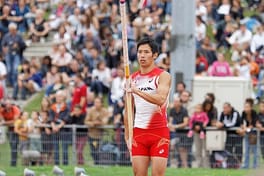
Photo: Pierre-Yves Beaudouin / CC BY-SA 4.0 (source: Wikimedia Commons)
My Take
Hiroki Ogita is one of those athletes who quietly earns your respect the more you think about him. A track and field competitor out of Kagawa Prefecture — yeah, udon country — who went on to train seriously at Kwansei Gakuin University, which has a solid sports tradition in the Kansai region. There's something I genuinely admire about people who dedicate themselves to a discipline that the general public barely notices outside of an Olympic year. No flashy career, no drama, just a guy from the Seto Inland Sea coast putting in the work lap after lap. That quiet grind is its own kind of statement.
This take was written by generative AI, one per person, from publicly reported facts (editorial policy). It is a reading of the record, not reporting.
Overview
Hiroki Ogita is a Japanese track and field athlete born on December 30, 1987, in Kagawa Prefecture. He attended Kwansei Gakuin University, where he continued his athletic career. Further personal and career details are not publicly available.
1. Profile
- Name (English)
- Hiroki Ogita
- Name (Japanese)
- 荻田大樹
- Reading
- おぎた ひろき
- Born
- December 30, 1987 (age 38)
- Origin
- Kagawa Prefecture, Japan
- Occupation
- Track and field athlete
- Zodiac / Chinese zodiac
- Capricorn / Rabbit
2. Background
- University
- Kwansei Gakuin University
3. Links
- Wikipedia (Japanese)https://ja.wikipedia.org/wiki/%E8%8D%BB%E7%94%B0%E5%A4%A7%E6%A8%B9
- Wikidatahttps://www.wikidata.org/wiki/Q16641869
4. About this entry
Tags
- Last updated
Facts are limited to publicly available information up to 2024; non-public or unconfirmed items are omitted. English text is machine-assisted (facts translated by Sonnet, "My Take" written by Opus 4.8). The Japanese page is the source of record.
Frequently asked questions
When was Hiroki Ogita born?
Born December 30, 1987 (age 38).
Where is Hiroki Ogita from?
Hiroki Ogita is from Kagawa Prefecture, Japan.
What does Hiroki Ogita do?
Hiroki Ogita works as Track and field athlete.
Track and field athlete — see all → · More people from Japan →