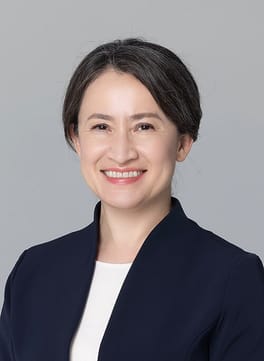
Photo: 總統府 / Attribution (source: Wikimedia Commons)
Hsiao Bi-khim is a politician and diplomat, born on August 7, 1971 in Kobe, Hyōgo Prefecture, Japan. Hsiao Bi-khim is 55 years old as of 2026. Education on record includes Tainan Municipal Houjia Junior High School and National University of Tainan Affiliated Primary School.
My Take
Hsiao Bi-khim is the kind of figure who makes you realize how rare genuine diplomatic credibility is. Born in Kobe to a Taiwanese father and American mother, she grew up straddling worlds — literally — and that cross-cultural DNA shaped everything about her career. She spent years as a DPP legislator before becoming Taiwan's de facto ambassador to Washington as head of the Taipei Economic and Cultural Representative Office during one of the most tense stretches in cross-strait relations in decades, and she handled it with a calm, sharp authority that made her a genuine star in global foreign-policy circles. Watching her navigate the tightrope of U.S.-Taiwan relations without a formal treaty framework was quietly impressive. And then in 2024, she stepped into the vice presidency alongside Lai Ching-te — a real capstone for someone who has spent a career building bridges under pressure. A genuinely compelling political figure.
This take was written by generative AI, one per person, from publicly reported facts (editorial policy). It is a reading of the record, not reporting.
1. Profile
- Name (English)
- Hsiao Bi-khim
- Name (Japanese)
- 蕭美琴
- Reading
- しょう びきん
- Born
- August 7, 1971 (age 55)
- Origin
- Kobe, Hyōgo Prefecture, Japan
- Occupation
- politician / diplomat
- Zodiac / Chinese zodiac
- Leo / Boar
2. Background
- High school
- Tainan Municipal Houjia Junior High School
- University
- National University of Tainan Affiliated Primary School
3. Links
- Instagramhttps://www.instagram.com/bikhimhsiao/
- Xhttps://x.com/bikhim
- Wikipedia (English)https://en.wikipedia.org/wiki/Hsiao%20Bi-khim
- Wikipedia (Japanese)https://ja.wikipedia.org/wiki/%E8%95%AD%E7%BE%8E%E7%90%B4
- Wikidatahttps://www.wikidata.org/wiki/Q700752
4. About this entry
Tags
- Last updated
Facts are limited to publicly available information up to 2024; non-public or unconfirmed items are omitted. English text is machine-assisted (facts translated by Sonnet, "My Take" written by Opus 4.8). The Japanese page is the source of record.
Frequently asked questions
When was Hsiao Bi-khim born?
Born August 7, 1971 (age 55).
Where is Hsiao Bi-khim from?
Hsiao Bi-khim is from Kobe, Hyōgo Prefecture, Japan.
What does Hsiao Bi-khim do?
Hsiao Bi-khim works as politician, diplomat.
Politician — see all → · Diplomat — see all → · More people from Japan →