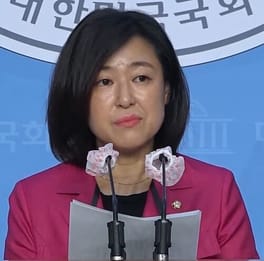
Photo: MBC PD수첩 / CC BY 3.0 (source: Wikimedia Commons)
Hwangbo Seung-hee was born on August 5, 1976 in Yeongdo District, South Korea. Public records list Hwangbo Seung-hee as a politician. The age as of 2026 is 50. Schooling on record includes Yeongdo Girls' High School and Ewha Womans University.
My Take
What earns my respect for Hwangbo Seung-hee is the unglamorous, ground-up route she took. From a girls' high school in Busan's Yeongdo District to Ewha Womans University, then district council, metropolitan council, and finally the National Assembly since 2020, she climbed each rung rather than parachuting in. Serving as the People Power Party's Youth Chief through 2024 signals a politician trusted to speak for a generation. I tend to trust people who learn governance from the bottom up, because they know what a vote actually costs at street level. Quiet persistence over headline flash is a profile I find genuinely credible.
This take was written by generative AI, one per person, from publicly reported facts (editorial policy). It is a reading of the record, not reporting.
1. Profile
- Name (English)
- Hwangbo Seung-hee
- Name (Japanese)
- 皇甫承希
- Reading
- ふぁんぼ・すんひ
- Born
- August 5, 1976 (age 50)
- Origin
- Yeongdo District, South Korea
- Occupation
- politician
- Zodiac / Chinese zodiac
- Leo / Dragon
2. Background
- High school
- Yeongdo Girls' High School
- University
- Ewha Womans University
3. Links
- Wikipedia (English)https://en.wikipedia.org/wiki/Hwangbo%20Seung-hee
- Wikipedia (Japanese)https://ja.wikipedia.org/wiki/%E7%9A%87%E7%94%AB%E6%89%BF%E5%B8%8C
- Wikidatahttps://www.wikidata.org/wiki/Q54802943
4. About this entry
Tags
- Last updated
Facts are limited to publicly available information up to 2024; non-public or unconfirmed items are omitted. English text is machine-assisted (facts translated by Sonnet, "My Take" written by Opus 4.8). The Japanese page is the source of record.
Frequently asked questions
When was Hwangbo Seung-hee born?
Born August 5, 1976 (age 50).
Where is Hwangbo Seung-hee from?
Hwangbo Seung-hee is from Yeongdo District, South Korea.
What does Hwangbo Seung-hee do?
Hwangbo Seung-hee works as politician.