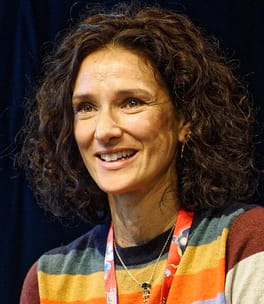
Photo: Raboe001 / CC BY-SA 3.0 (source: Wikimedia Commons)
Born on September 27, 1973, Indira Varma is from Bath, United Kingdom. Public records list Indira Varma as a stage actor, film actor and television actor. The age as of 2026 is 53.
My Take
Indira Varma is one of those actors who quietly makes everything better just by showing up. Raised in Bath by an Indian father and a Swiss-Italian mother, she brings a rare combination of classical British stage training and an utterly singular screen presence that very few actors can pull off. I first really noticed her in Rome, where she played Niobe with such grounded emotional intelligence that she held her own against the show's epic scale without ever seeming to try too hard. Then came Ellaria Sand in Game of Thrones — magnetic, dangerous, and genuinely heartbreaking by the end. What I love most about her is that she never phones it in; even in smaller roles she's fully committed, and her eyes do half the work before a single word lands. A serious talent who deserves way more top billing than she's ever gotten.
This take was written by generative AI, one per person, from publicly reported facts (editorial policy). It is a reading of the record, not reporting.
1. Profile
- Name (English)
- Indira Varma
- Name (Japanese)
- インディラ・ヴァルマ
- Reading
- いんでぃら・ゔぁるま
- Born
- September 27, 1973 (age 53)
- Origin
- Bath, United Kingdom
- Occupation
- stage actor / film actor / television actor / actor
- Zodiac / Chinese zodiac
- Libra / Ox
2. Links
- Instagramhttps://www.instagram.com/indiravarma/
- Xhttps://x.com/indyv9
- Wikipedia (English)https://en.wikipedia.org/wiki/Indira%20Varma
- Wikipedia (Japanese)https://ja.wikipedia.org/wiki/%E3%82%A4%E3%83%B3%E3%83%87%E3%82%A3%E3%83%A9%E3%83%BB%E3%83%B4%E3%82%A1%E3%83%AB%E3%83%9E
- Wikidatahttps://www.wikidata.org/wiki/Q463585
3. About this entry
Tags
- Last updated
Only publicly available facts are listed; non-public or unconfirmed items are omitted. Base data was compiled from Wikidata from June 2026 onward; ages are recalculated daily and deaths are checked against Wikidata on an ongoing basis. English text is machine-assisted (facts translated by Sonnet, "My Take" written by Opus 4.8). The Japanese page is the source of record.
Frequently asked questions
When was Indira Varma born?
Indira Varma was born on September 27, 1973 and is 53 years old.
Where is Indira Varma from?
Indira Varma is from Bath, United Kingdom.
What does Indira Varma do?
Indira Varma works as stage actor, film actor, television actor, actor.
Stage actor — see all → · Film actor — see all → · More people from the United Kingdom → · More people born on September 27 →