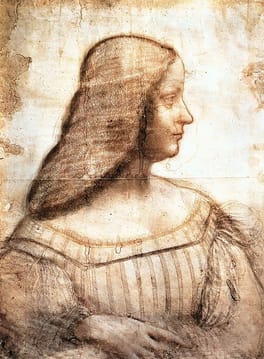
Photo: Leonardo da Vinci / Public domain (source: Wikimedia Commons)
Isabella d'Este was born on May 18, 1474 in Ferrara, Province of Ferrara, Italy. Public records list Isabella d'Este as a salonnière and art collector. Death is recorded on February 13, 1539, at the age of 64.
My Take
Isabella d'Este is one of the Renaissance figures I most enjoy thinking about. As Marchioness of Mantua she wielded influence that few women of her era could claim, not merely as a patron of art but as a tastemaker whose fashions other women copied and as a shrewd political operator. What impresses me is how she turned cultural sophistication into genuine power, navigating a world built for men with intellect and style as her instruments. Nearly five centuries on, she still reads as remarkably modern: ambitious, self-fashioning, and unafraid to make her own court a center of gravity.
This take was written by generative AI, one per person, from publicly reported facts (editorial policy). It is a reading of the record, not reporting.
1. Profile
- Name (English)
- Isabella d'Este
- Name (Japanese)
- イザベラ・デステ
- Reading
- いざべら・ですて
- Born
- May 18, 1474 – February 13, 1539
- Origin
- Ferrara, Province of Ferrara, Italy
- Occupation
- salonnière / art collector
- Zodiac / Chinese zodiac
- Taurus / Horse
2. Links
- Wikipedia (English)https://en.wikipedia.org/wiki/Isabella%20d'Este
- Wikipedia (Japanese)https://ja.wikipedia.org/wiki/%E3%82%A4%E3%82%B6%E3%83%99%E3%83%A9%E3%83%BB%E3%83%87%E3%82%B9%E3%83%86
- Wikidatahttps://www.wikidata.org/wiki/Q593626
3. About this entry
Tags
- Last updated
Facts are limited to publicly available information up to 2024; non-public or unconfirmed items are omitted. English text is machine-assisted (facts translated by Sonnet, "My Take" written by Opus 4.8). The Japanese page is the source of record.
Frequently asked questions
When was Isabella d'Este born?
Isabella d'Este was born on May 18, 1474.
When did Isabella d'Este die?
Isabella d'Este died on February 13, 1539, aged 64.
Where was Isabella d'Este from?
Isabella d'Este was from Ferrara, Province of Ferrara, Italy.
What did Isabella d'Este do?
Isabella d'Este worked as salonnière, art collector.
Art collector — see all → · More people from Italy → · More people born on May 18 →