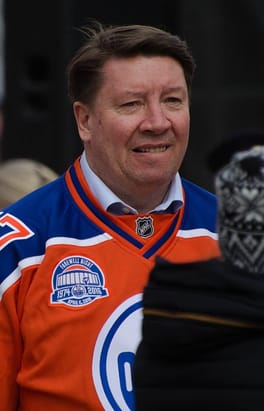
Photo: Connor Mah / CC BY-SA 3.0 (source: Wikimedia Commons)
Jari Kurri is an ice hockey player and ice hockey coach, born on May 18, 1960 in Helsinki, Uusimaa, Finland. That puts Jari Kurri at 66 years old in 2026. Awards on record include Stanley Cup, Lady Byng Memorial Trophy (1985) and Hockey Hall of Fame. The listed height is 193 cm.
My Take
Jari Kurri is a name that makes me sit up straight. A 193 cm Finn who crossed an ocean to dominate the NHL across five franchises, lift the Stanley Cup, and reach the Hockey Hall of Fame, he is the genuine article. The detail I love most is his 1985 Lady Byng Trophy: a prolific scorer honored for sportsmanship rather than aggression, a rare blend of lethal and gentlemanly. To leave Scandinavia and succeed at the world's highest level takes more than talent; it demands a willingness to absorb isolation and pressure. To me, Kurri's right wing remains a point of pure Finnish pride.
This take was written by generative AI, one per person, from publicly reported facts (editorial policy). It is a reading of the record, not reporting.
1. Profile
- Name (English)
- Jari Kurri
- Name (Japanese)
- ヤリ・クリ
- Reading
- やり・くり
- Born
- May 18, 1960 (age 66)
- Origin
- Helsinki, Uusimaa, Finland
- Height
- 193 cm
- Occupation
- ice hockey player / ice hockey coach
- Zodiac / Chinese zodiac
- Taurus / Rat
2. Background
Awards & achievements
- Stanley Cup
- 1985 Lady Byng Memorial Trophy
- Hockey Hall of Fame
3. Links
- Wikipedia (English)https://en.wikipedia.org/wiki/Jari%20Kurri
- Wikipedia (Japanese)https://ja.wikipedia.org/wiki/%E3%83%A4%E3%83%AA%E3%83%BB%E3%82%AF%E3%83%AA
- Wikidatahttps://www.wikidata.org/wiki/Q363621
4. About this entry
Tags
- Last updated
Facts are limited to publicly available information up to 2024; non-public or unconfirmed items are omitted. English text is machine-assisted (facts translated by Sonnet, "My Take" written by Opus 4.8). The Japanese page is the source of record.
Frequently asked questions
When was Jari Kurri born?
Born May 18, 1960 (age 66).
Where is Jari Kurri from?
Jari Kurri is from Helsinki, Uusimaa, Finland.
What does Jari Kurri do?
Jari Kurri works as ice hockey player, ice hockey coach.
How tall is Jari Kurri?
Jari Kurri is 193 cm.
Ice hockey player — see all → · Ice hockey coach — see all → · More people from Finland →