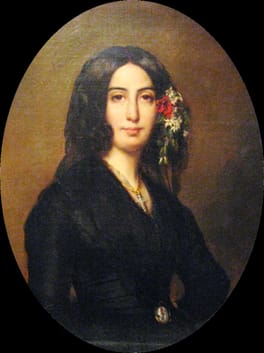
Photo: Auguste Charpentier / Public domain (source: Wikimedia Commons)
George Sand was credited as a writer, journalist and salonnière. Born on July 1, 1804, George Sand was from Paris, France. Death is recorded on June 8, 1876, at the age of 71. Credited works include Indiana, Lelia and Mauprat.
My Take
George Sand was one of those rare figures who was larger than life before the phrase even existed — a 19th-century French woman who wore trousers, smoked cigars, wrote prolifically under a man's name, and still managed to out-famous Victor Hugo and Balzac in Britain at her peak. I love that she didn't just write around the edges of social convention; she basically demolished it with novels like Indiana, Lelia, and Consuelo, while also running a literary salon and carrying on passionate love affairs she never apologized for. Her pastoral novels like La Mare au diable are quietly beautiful, too — people forget she had this tender, earthy side alongside all the scandal. Nearly two centuries later she still reads as someone who refused to be contained, and that energy hasn't aged a day.
This take was written by generative AI, one per person, from publicly reported facts (editorial policy). It is a reading of the record, not reporting.
1. Profile
- Name (English)
- George Sand
- Name (Japanese)
- ジョルジュ・サンド
- Reading
- じょるじゅ・さんど
- Born
- July 1, 1804 – June 8, 1876
- Origin
- Paris, France
- Occupation
- writer / journalist / salonnière / playwright / novelist
- Zodiac / Chinese zodiac
- Cancer / Rat
2. Works & records
Filmography / notable works
| Category | Title |
|---|---|
| Notable work | Indiana |
| Notable work | Lelia |
| Notable work | Mauprat |
| Notable work | Consuelo |
| Notable work | La Mare au diable |
| Notable work | La Petite Fadette |
3. Links
4. About this entry
Tags
- Last updated
Facts are limited to publicly available information up to 2024; non-public or unconfirmed items are omitted. English text is machine-assisted (facts translated by Sonnet, "My Take" written by Opus 4.8). The Japanese page is the source of record.
Frequently asked questions
When was George Sand born?
Born July 1, 1804.
When did George Sand die?
Died June 8, 1876, aged 71.
Where was George Sand from?
George Sand was from Paris, France.
What did George Sand do?
George Sand worked as writer, journalist, salonnière, playwright, novelist.
What was George Sand known for?
Notable works include Indiana, Lelia, Mauprat.
Writer — see all → · Journalist — see all → · More people from France →