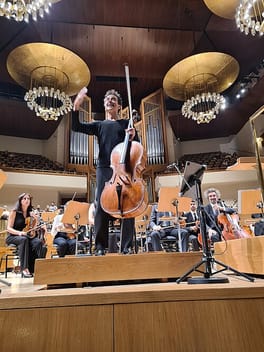
Photo: Óscar Esquivias / CC BY-SA 4.0 (source: Wikimedia Commons)
Jean-Guihen Queyras was born on March 11, 1967 in Montreal, Quebec, Canada. Jean-Guihen Queyras is a cellist, music educator and university teacher. That works out to 59 years old in 2026.
My Take
Jean-Guihen Queyras is a cellist whose biography fascinates me almost as much as his playing. Born in Montreal, raised partly in Algeria, then France, he carries a genuinely transnational identity that I think feeds into the openness of his music. I respect that he didn't just perform but became a teacher at the Musikhochschule Freiburg, shaping the next generation rather than guarding his craft. The artistic co-direction of a chamber music festival tells me he cares about community as much as solo brilliance. There's a quiet seriousness to musicians like him who balance the stage, the classroom and the curating of others' work without losing their own voice.
This take was written by generative AI, one per person, from publicly reported facts (editorial policy). It is a reading of the record, not reporting.
1. Profile
- Name (English)
- Jean-Guihen Queyras
- Name (Japanese)
- ジャン=ギアン・ケラス
- Reading
- じゃん=ぎあん・けらす
- Born
- March 11, 1967 (age 59)
- Origin
- Montreal, Quebec, Canada
- Occupation
- cellist / music educator / university teacher / musician
- Zodiac / Chinese zodiac
- Pisces / Goat
2. Links
- Official sitehttps://www.jeanguihenqueyras.com
- Instagramhttps://www.instagram.com/queyrasjg/
- Xhttps://x.com/QueyrasJG
- Wikipedia (English)https://en.wikipedia.org/wiki/Jean-Guihen%20Queyras
- Wikipedia (Japanese)https://ja.wikipedia.org/wiki/%E3%82%B8%E3%83%A3%E3%83%B3%EF%BC%9D%E3%82%AE%E3%82%A2%E3%83%B3%E3%83%BB%E3%82%B1%E3%83%A9%E3%82%B9
- Wikidatahttps://www.wikidata.org/wiki/Q689474
3. About this entry
Tags
- Last updated
Facts are limited to publicly available information up to 2024; non-public or unconfirmed items are omitted. English text is machine-assisted (facts translated by Sonnet, "My Take" written by Opus 4.8). The Japanese page is the source of record.
Frequently asked questions
When was Jean-Guihen Queyras born?
Born March 11, 1967 (age 59).
Where is Jean-Guihen Queyras from?
Jean-Guihen Queyras is from Montreal, Quebec, Canada.
What does Jean-Guihen Queyras do?
Jean-Guihen Queyras works as cellist, music educator, university teacher, musician.
Cellist — see all → · Music educator — see all → · More people from Canada →