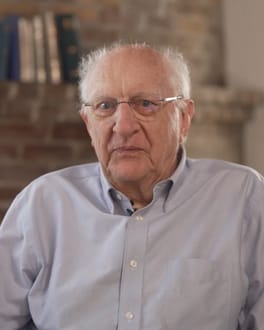
Photo: UC Berkeley / CC BY 4.0 (source: Wikimedia Commons)
John Clarke was born on February 10, 1942 in Cambridge, United Kingdom and is credited as a physicist and materials scientist. That puts John Clarke at 84 years old in 2026. Education on record includes University of Cambridge. Recorded honors include Guggenheim Fellowship, Fellow of the Royal Society, Hughes Medal (2004) and 5 more.
My Take
What strikes me about John Clarke is how he turned a notoriously finicky tool into a whole field. Born in Cambridge in 1942 and trained there, he spent his career at Berkeley making superconducting devices, SQUIDs, actually usable for real measurement. Being called "the godfather of superconducting electronics" isn't a throwaway line; the Hughes Medal and Comstock Prize back it up. What I find quietly significant is that his 1980s team included Martinis and Devoret, names now central to quantum computing. Clarke isn't a household name, but a lot of today's quantum hardware traces back through his lab.
This take was written by generative AI, one per person, from publicly reported facts (editorial policy). It is a reading of the record, not reporting.
1. Profile
- Name (English)
- John Clarke
- Name (Japanese)
- ジョン・クラーク
- Reading
- じょん・くらーく
- Born
- February 10, 1942 (age 84)
- Origin
- Cambridge, United Kingdom
- Occupation
- physicist / materials scientist
- Zodiac / Chinese zodiac
- Aquarius / Horse
2. Background
- University
- University of Cambridge
Awards & achievements
- Guggenheim Fellowship
- Fellow of the Royal Society
- 2004 Hughes Medal
- 1987 Fritz London Award
- 1999 Comstock Prize in Physics
- Fellow of the American Association for the Advancement of Science
- Fellow of the American Academy of Arts and Sciences
- 1998 Joseph F. Keithley Award For Advances in Measurement Science
3. Links
4. About this entry
Tags
- Last updated
Facts are limited to publicly available information up to 2024; non-public or unconfirmed items are omitted. English text is machine-assisted (facts translated by Sonnet, "My Take" written by Opus 4.8). The Japanese page is the source of record.
Frequently asked questions
When was John Clarke born?
Born February 10, 1942 (age 84).
Where is John Clarke from?
John Clarke is from Cambridge, United Kingdom.
What does John Clarke do?
John Clarke works as physicist, materials scientist.
Physicist — see all → · More people from the United Kingdom →