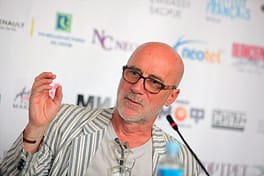
Photo: Paul Katzenberger / CC BY-SA 4.0 (source: Wikimedia Commons)
John Mathieson is credited as a cinematographer and camera operator. John Mathieson was born in Dorset, United Kingdom on May 3, 1961. The age as of 2026 is 65. Awards on record include Ordre des Arts et des Lettres, BAFTA Award for Best Cinematography (2001) and Chevalier des Arts et des Lettres (2001).
My Take
I am one of those viewers who watches films by their cinematographers, and John Mathieson is squarely on my list. Emerging from the music-video scene of the late eighties, he became Ridley Scott's trusted eye, winning a BAFTA and an Oscar nomination for Gladiator and later earning France's Ordre des Arts et des Lettres. The dusty Roman light, the weight of the Colosseum, the way shadow gives a frame its mood, that is his craftsmanship at work. Audiences feel his images without ever knowing his name, and I think that invisible authorship deserves real respect rather than passing mention.
This take was written by generative AI, one per person, from publicly reported facts (editorial policy). It is a reading of the record, not reporting.
1. Profile
- Name (English)
- John Mathieson
- Name (Japanese)
- ジョン・マシソン
- Reading
- じょん・ましそん
- Born
- May 3, 1961 (age 65)
- Origin
- Dorset, United Kingdom
- Occupation
- cinematographer / camera operator
- Zodiac / Chinese zodiac
- Taurus / Ox
2. Background
Awards & achievements
- Ordre des Arts et des Lettres
- 2001 BAFTA Award for Best Cinematography
- 2001 Chevalier des Arts et des Lettres
3. Links
4. About this entry
Tags
- Last updated
Facts are limited to publicly available information up to 2024; non-public or unconfirmed items are omitted. English text is machine-assisted (facts translated by Sonnet, "My Take" written by Opus 4.8). The Japanese page is the source of record.
Frequently asked questions
When was John Mathieson born?
Born May 3, 1961 (age 65).
Where is John Mathieson from?
John Mathieson is from Dorset, United Kingdom.
What does John Mathieson do?
John Mathieson works as cinematographer, camera operator.
Cinematographer — see all → · Camera operator — see all → · More people from the United Kingdom →