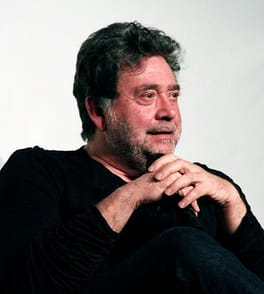
Photo: Guillermo_Navarro_VFS_01.jpg: Vancouver Film School derivative work: — Finemann (talk) / CC BY 2.0 (source: Wikimedia Commons)
Guillermo Navarro is a cinematographer, photographer and television director. Awards on record include Academy Award for Best Cinematography (2007).
My Take
I've almost certainly watched Navarro's work without crediting him, which is the cinematographer's quiet fate. This Mexico City native shot Pan's Labyrinth for Guillermo del Toro and won the Academy Award for it, conjuring that damp, candlelit labyrinth out of pure light and shadow. A longtime collaborator of Robert Rodriguez too, he is a craftsman who decides the very air a film breathes. I'll argue that authorship often lives more in the image-maker than the writer or director; the look is the feeling. That a Mexican eye underpins the texture of so many beloved films is, to me, one of the most thrilling stories in modern cinema.
This take was written by generative AI, one per person, from publicly reported facts (editorial policy). It is a reading of the record, not reporting.
1. Profile
- Name (English)
- Guillermo Navarro
- Name (Japanese)
- ギレルモ・ナヴァロ
- Reading
- ぎれるも・なゔぁろ
- Born
- 1955
- Origin
- Mexico City, Mexico
- Occupation
- cinematographer / photographer / television director / film director / screenwriter
- Zodiac / Chinese zodiac
- Goat
2. Background
Awards & achievements
- 2007 Academy Award for Best Cinematography
3. Links
- Official sitehttp://planbfree.com/dop/guillermo-navarro-4/
- Wikipedia (English)https://en.wikipedia.org/wiki/Guillermo%20Navarro
- Wikipedia (Japanese)https://ja.wikipedia.org/wiki/%E3%82%AE%E3%83%AC%E3%83%AB%E3%83%A2%E3%83%BB%E3%83%8A%E3%83%B4%E3%82%A1%E3%83%AD
- Wikidatahttps://www.wikidata.org/wiki/Q1314113
4. About this entry
Tags
- Last updated
Facts are limited to publicly available information up to 2024; non-public or unconfirmed items are omitted. English text is machine-assisted (facts translated by Sonnet, "My Take" written by Opus 4.8). The Japanese page is the source of record.
Frequently asked questions
Where is Guillermo Navarro from?
Guillermo Navarro is from Mexico City, Mexico.
What does Guillermo Navarro do?
Guillermo Navarro works as cinematographer, photographer, television director, film director, screenwriter.
Cinematographer — see all → · Photographer — see all → · More people from Mexico →