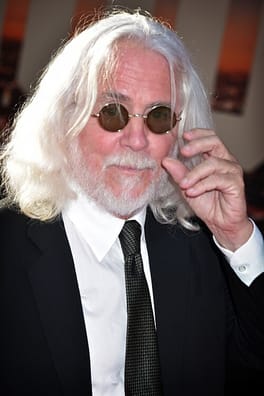
Photo: Toglenn / CC BY-SA 4.0 (source: Wikimedia Commons)
Born on August 27, 1955, Robert Richardson is from Hyannis, Massachusetts, United States. Robert Richardson is listed as a cinematographer and film producer. The age as of 2026 is 71. Education on record includes University of Vermont. Listed accolades include Academy Award for Best Cinematography (1992, 2005, 2012).
My Take
Robert Richardson is, to me, one of the most important cinematographers alive. Born in Hyannis, Massachusetts in 1955, he has won the Academy Award for Best Cinematography three times, a feat shared only with Vittorio Storaro and Emmanuel Lubezki. What fascinates me is his range: his collaborations with Oliver Stone, Martin Scorsese, and Quentin Tarantino span wildly different visual languages, from the jagged urgency of JFK to the lush period look of The Aviator and Hugo. He moves between film and digital without losing his signature, and that adaptability across decades and directors is exactly what separates a great cinematographer from a merely good one.
This take was written by generative AI, one per person, from publicly reported facts (editorial policy). It is a reading of the record, not reporting.
1. Profile
- Name (English)
- Robert Richardson
- Name (Japanese)
- ロバート・リチャードソン
- Reading
- ろばーと・りちゃーどそん
- Born
- August 27, 1955 (age 71)
- Origin
- Hyannis, Massachusetts, United States
- Occupation
- cinematographer / film producer
- Zodiac / Chinese zodiac
- Virgo / Goat
2. Background
- University
- University of Vermont
Awards & achievements
- 1992 Academy Award for Best Cinematography
- 2005 Academy Award for Best Cinematography
- 2012 Academy Award for Best Cinematography
3. Works & records
Filmography / notable works
| Category | Title |
|---|---|
| Notable work | JFK |
| Notable work | The Aviator |
| Notable work | Hugo |
4. Links
- Wikipedia (English)https://en.wikipedia.org/wiki/Robert%20Richardson%20(cinematographer)
- Wikipedia (Japanese)https://ja.wikipedia.org/wiki/%E3%83%AD%E3%83%90%E3%83%BC%E3%83%88%E3%83%BB%E3%83%AA%E3%83%81%E3%83%A3%E3%83%BC%E3%83%89%E3%82%BD%E3%83%B3%20(%E6%92%AE%E5%BD%B1%E7%9B%A3%E7%9D%A3)
- Wikidatahttps://www.wikidata.org/wiki/Q364017
5. About this entry
Tags
- Last updated
Facts are limited to publicly available information up to 2024; non-public or unconfirmed items are omitted. English text is machine-assisted (facts translated by Sonnet, "My Take" written by Opus 4.8). The Japanese page is the source of record.
Frequently asked questions
When was Robert Richardson born?
Born August 27, 1955 (age 71).
Where is Robert Richardson from?
Robert Richardson is from Hyannis, Massachusetts, United States.
What does Robert Richardson do?
Robert Richardson works as cinematographer, film producer.
What is Robert Richardson known for?
Notable works include JFK, The Aviator, Hugo.
Cinematographer — see all → · Film producer — see all → · More people from the United States →